
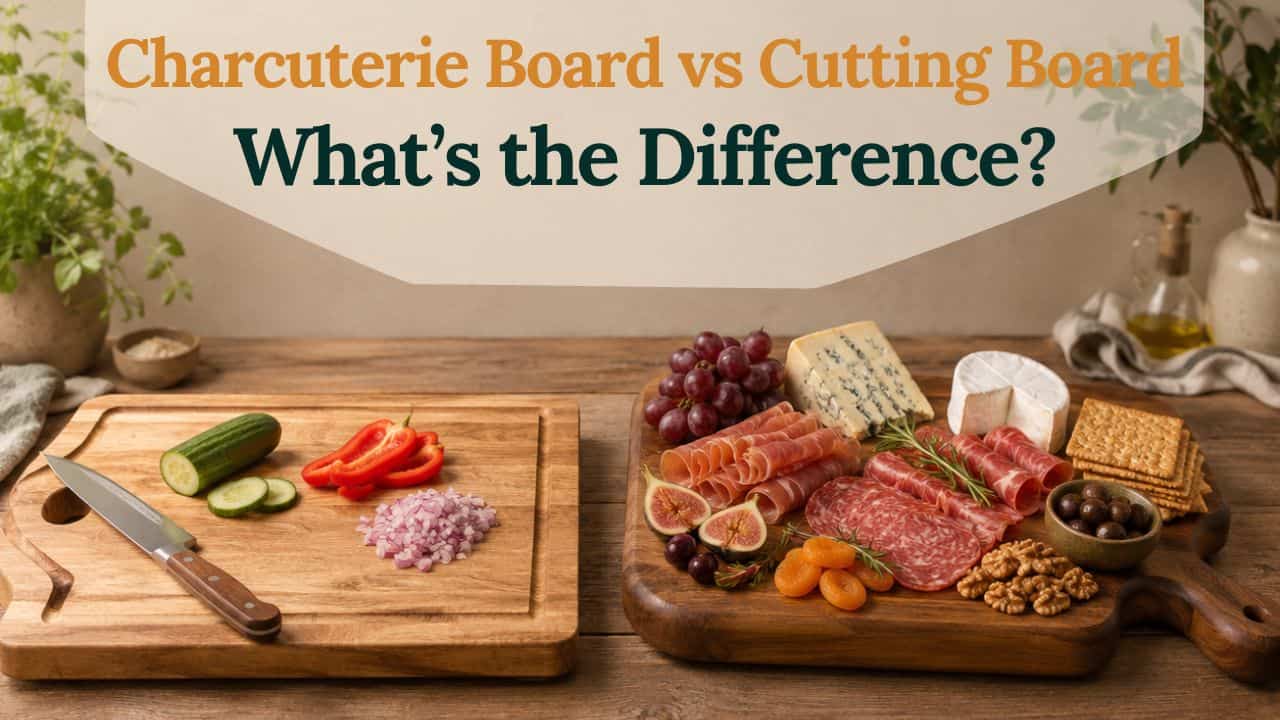
A charcuterie board and a cutting board can look almost identical. Put two simple walnut boards next to each other and, depending on how they were made, the difference might be obvious — or there might hardly be any difference at all.
For me, that is the interesting part.
I make quite a few wooden cutting boards, from simple face grain boards to thicker edge grain and end grain builds. Some of them are clearly work surfaces made for everyday food preparation. Others are more decorative, keep the natural edge, or are made to look good when food is served directly on them.
So I do not think the difference comes down to the name alone.
A cutting board is primarily built to be worked on with a knife, while a charcuterie board is primarily built for serving and presentation. That difference affects the thickness, weight, surface, shape, handles, wood choice, and other details I would include when making one.
And yes — a good wooden cutting board can often make an excellent charcuterie board too.
The opposite direction needs a little more thought.
If you are still deciding what kind of cutting board you want to make, my Types of Cutting Boards (And How to Make Them) guide goes through the different build styles and construction methods in more detail.
Table of Contents
- Charcuterie Board vs Cutting Board: Quick Comparison
- What Is a Charcuterie Board?
- What Is a Cutting Board?
- The Real Difference Is How You Plan to Use It
- Does Thickness Matter?
- Does the Wood Need to Be Different?
- Cutting Board Features That May Not Make Sense on a Charcuterie Board
- Can You Use a Cutting Board as a Charcuterie Board?
- Can You Use a Charcuterie Board as a Cutting Board?
- Which One Would I Build?
- Wrap-Up
- Frequently Asked Questions
Charcuterie Board vs Cutting Board: Quick Comparison
The easiest way to separate the two is by looking at purpose first and design second.
| Feature | Charcuterie Board | Cutting Board |
|---|---|---|
| Main purpose | Serving and presentation | Cutting, chopping, and food preparation |
| Knife use | Light or occasional | Regular use |
| Typical construction | Often face grain or a single slab | Face, edge, or end grain |
| Thickness | Often thinner and lighter | Usually thicker and more substantial |
| Shape | Can be decorative or irregular | Usually optimized for usable work area |
| Handles | Often useful | Optional |
| Juice groove | Usually unnecessary | Useful for some types of food preparation |
| Main design priority | Presentation + easy serving | Durability + comfortable food preparation |
There is plenty of overlap, though. These are general differences, not strict rules.
A thick walnut board can be used for both. A thin decorative serving board with a handle might be something I would keep only for serving.
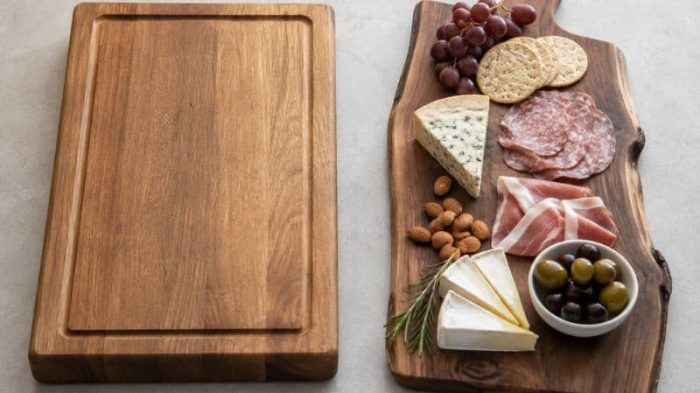
What Is a Charcuterie Board?
Strictly speaking, charcuterie refers to prepared meats such as salami, prosciutto, pâté, and similar foods.
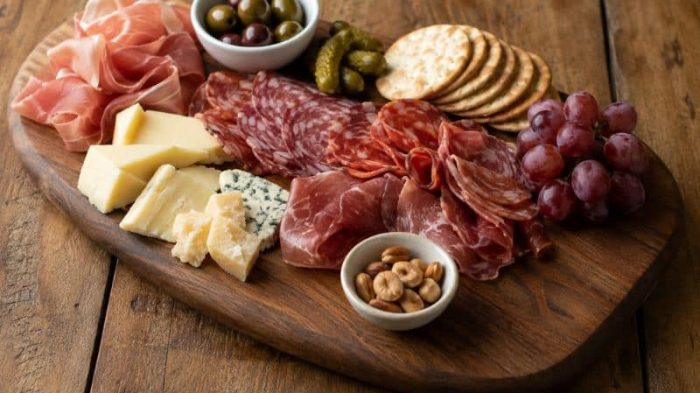
But when we say charcuterie board, we normally mean the board or platter used to arrange and serve those foods together with things like:
- cheese
- crackers
- bread
- fruit
- nuts
- olives
- spreads
- dips
From a woodworking point of view, I think of it more broadly as a serving board.
The surface needs to be suitable for food, but it does not necessarily need to withstand years of chopping.
That gives you much more freedom with the design.
You can make it thinner. You can keep an irregular or live edge. You can add a long handle. You can use a more decorative shape. And because presentation matters more, you can choose the grain and layout largely for how the finished board looks.
That is one reason face grain works so well for this type of board.
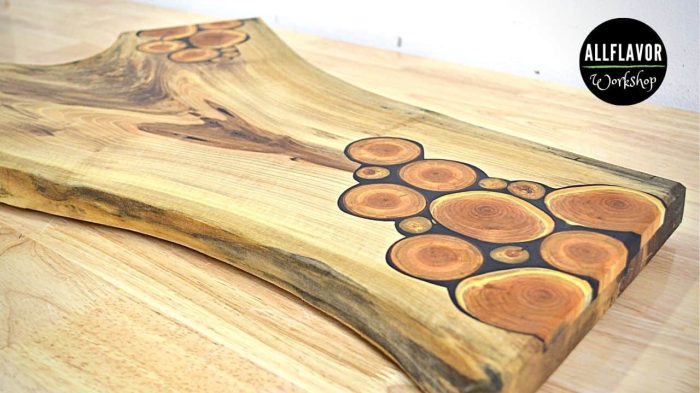
My DIY Face Grain Cutting Board is actually a good example of where the line starts getting blurry. It uses walnut, keeps the live edge, and has cherry branch and epoxy details. It can be used as a cutting board, but visually it also works very naturally as a serving or charcuterie board.
What Is a Cutting Board?
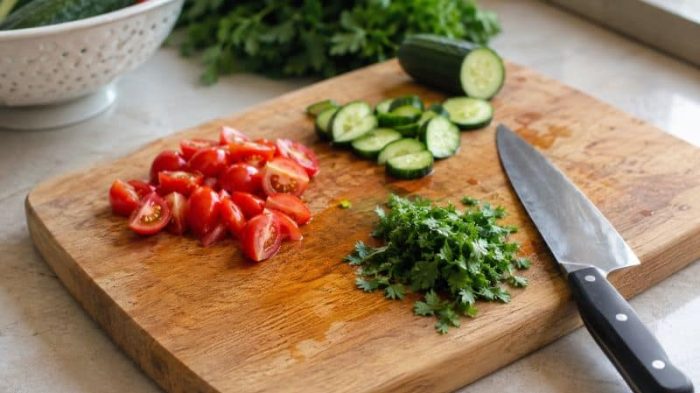
A cutting board is different because the surface itself is the tool. It needs to deal with repeated knife contact, moisture, food preparation, cleaning, and daily use.
That changes how I approach the build. For a board that will actually be used regularly for cutting, I pay more attention to:
- suitable hardwood
- enough thickness
- a stable construction
- a flat working surface
- comfortable dimensions
- food-safe finish
- ease of cleaning
- resistance to repeated knife marks
And unlike a charcuterie board, I might deliberately build it as edge grain or end grain because the grain orientation becomes part of how the board performs.
My Simple Walnut Cutting Board is a good example of a straightforward working board. It is still face grain and beginner-friendly, but it is about 35 mm / 1-3/8″ thick and includes a juice groove, side handles, and rubber feet.
Those are practical features first.
The Real Difference Is How You Plan to Use It
If I were building either board from scratch, this is the question I would ask first:
Am I making something primarily to prepare food on, or primarily to serve food on?
That decision answers most of the other questions. If it is mainly for serving, I can focus more on:
- the grain pattern
- shape
- visual contrast
- live edges
- decorative details
- lower weight
- carrying handles
If it is mainly for cutting, I would focus more on:
- a large usable surface
- thickness
- stability
- durability
- grain orientation
- knife-friendly wood
- maintenance
This is also why I would not get too hung up on what the board is called in a shop. Look at how it is built. That tells you far more than the label.
Does Thickness Matter?
Yes — but there is no single correct thickness for either type. For cutting boards, I generally prefer something substantial enough to stay stable and feel solid during use.
In my own builds, the exact dimensions depend on the type of board and how I plan to use it. A simple face-grain board can be relatively light, while a large end-grain board naturally becomes much thicker and heavier.
For a charcuterie board, you usually do not need that extra mass.
A thinner board is:
- easier to carry to the table
- easier to store
- lighter when fully loaded with food
- visually less bulky
But I would not make it unnecessarily thin either. Wood still needs enough thickness to remain reasonably stable.
If you want to go deeper into dimensions, I already have a separate guide on Cutting Board Sizes & Thicknesses where I look at board dimensions from the actual woodworking and usability side.
How I Think About Thickness
| Board Type | What I Prioritize | General Approach |
|---|---|---|
| Decorative charcuterie / serving board | Low weight + appearance | Can usually be thinner |
| Dual-purpose board | Balance between weight and durability | Medium thickness works well |
| Everyday cutting board | Stability + durability | I prefer a more substantial board |
| End grain cutting board | Construction + long-term working surface | Usually the thickest and heaviest option |
Does the Wood Need to Be Different?
Not necessarily.
Many of the woods I like for cutting boards also make excellent charcuterie boards. I regularly work with woods such as:
- walnut
- beech
- maple
- cherry
For a cutting board, though, I am more selective because the surface is going to take repeated knife contact and more demanding use.
I normally look for a closed-grain hardwood that is hard enough to last but not so hard that it is unnecessarily harsh on knife edges.
For a serving board, there is a little more flexibility because you are not chopping into the surface all day.
That said, I still would not forget food suitability just because it is a serving board.
The food is still sitting directly on the wood.
If you are choosing material for a board that may do both jobs, I would simply choose a wood that I am already comfortable using for cutting boards.
Walnut is a good example. I use it frequently because it machines well, looks great once oiled, and the color and grain make even a very simple board look finished.
You can see my full wood comparison in Best Wood for Cutting Boards.
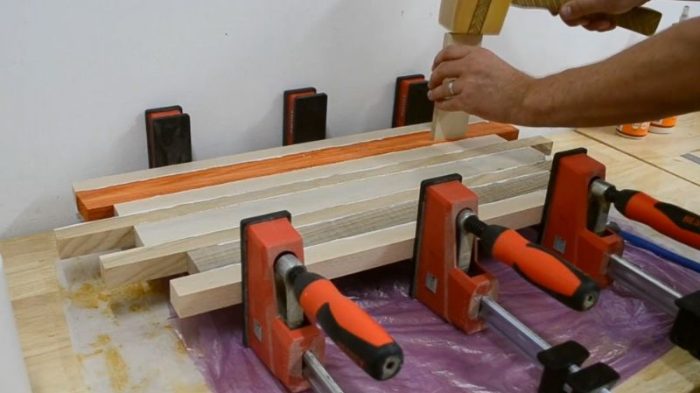
Cutting Board Features That May Not Make Sense on a Charcuterie Board
This is one of the areas where I think the difference becomes much easier to see.
I add several practical features to my cutting boards, but I would not automatically add all of them to a serving board.
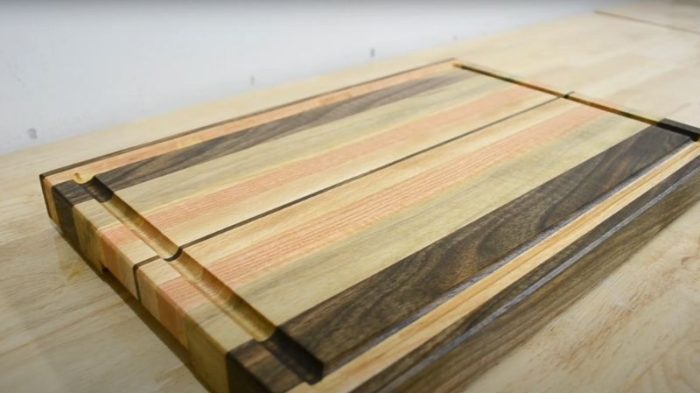
Juice Groove
A juice groove makes sense if you regularly cut meat, fruit, or other foods that release liquid.
For charcuterie, it can actually take away useful serving space.
If the board is mainly carrying cheese, crackers, salami, nuts, and fruit, I would generally rather have the full flat surface available.
Rubber Feet
I like rubber feet on many of my working cutting boards because they stop the board from sliding and give some airflow underneath.
But they also mean the board only really has one usable face.
For a serving board, I might prefer to keep both faces clean and usable.
Handles
This can go the opposite way.
Handles are useful on cutting boards, but they can be even more useful on a charcuterie board because you are actually carrying the entire loaded board to the table.
A routed finger grip, side handle, or extended paddle-style handle can make a lot of sense.
I have a separate guide showing How to Add Handles to a Cutting Board if you want to add them to your own build.
Rounded and Decorative Edges
On a cutting board I like comfortable edges, but I still want as much working area as possible.
A serving board gives me more freedom to shape the edge, add larger chamfers, keep a live edge, or generally make the board a bit more decorative.
Can You Use a Cutting Board as a Charcuterie Board?
Yes — and this is the direction that makes the most sense to me.
A good wooden cutting board already has:
- a food-safe surface
- suitable hardwood
- enough strength
- plenty of working area
- a finish intended for kitchen use
So there is usually nothing stopping you from cleaning it, arranging food on it, and putting it on the table.
In fact, if I wanted one board that could do everything, I would build a cutting board first and use it as a charcuterie board when needed.
There are just a few practical things to think about.
A thick end-grain board can be very heavy. A juice groove reduces some of the flat serving area. Rubber feet mean you probably only want to use one face.
None of those things prevents it from being a serving board — they simply make it a little less optimized for that job.
💡TIP: If you want one board to serve both purposes, I would keep the design fairly simple: medium thickness, flat surface, suitable hardwood, comfortable edges, and no permanent features that unnecessarily limit one side.
Can You Use a Charcuterie Board as a Cutting Board?
Sometimes — but this is where I would check the board first.
If the “charcuterie board” is really just a solid hardwood board with a food-safe finish, enough thickness, and a flat surface, then there may be very little preventing you from doing some cutting on it.
But some serving boards are designed much more around appearance.
I would be cautious if the board is:
- very thin
- made from an unsuitable or unknown material
- heavily decorated
- finished with something not intended for repeated knife contact
- made from several materials that are difficult to clean
- covered in deep engraving
- designed mainly as a display piece
A knife will also leave marks.
That might be completely fine on a cutting board. On a decorative serving board you made because you love the grain, live edge, epoxy detail, or surface design, it may be exactly what you wanted to avoid.
So my rule here would be:
If it was built to tolerate knife work, use it. If it was built primarily to look good on the table, I would keep it as a serving board.
Which One Would I Build?
If I could only have one, I would build a cutting board.
It gives you more flexibility.
You can chop vegetables on it today, slice bread tomorrow, and cover it with cheese, salami, fruit, and crackers when friends come over.
But if I already had a good cutting board and wanted another woodworking project, then a dedicated serving board would be a great place to have a little more fun with the design.
That is where I would think about:
- a live edge
- a thinner profile
- an interesting handle
- unusual grain
- a more decorative shape
- contrasting wood
- perhaps small details I would avoid on my everyday cutting surface
My face-grain walnut projects fit nicely into this middle ground because face grain is simple to build and gives you a lot of visual surface to work with.
If you want a straightforward first board, have a look at my Simple Walnut Cutting Board.
If you want something more decorative, the DIY Face Grain Cutting Board with its live edge and inlay is much closer to the serving-board side.
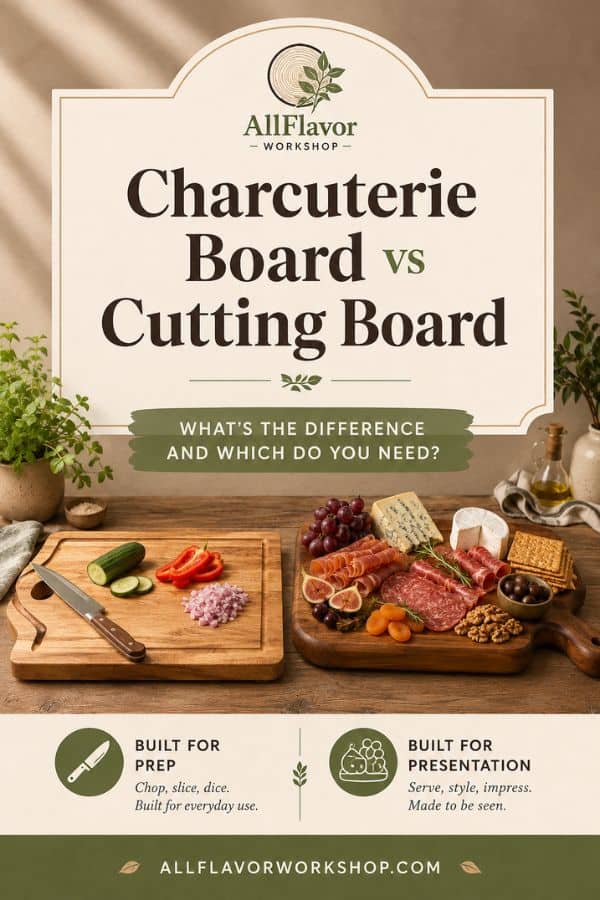
📌 Save THIS PIN to your Board on Pinterest!
Wrap-Up
The difference between a charcuterie board and a cutting board is less about what the board is called and more about what it was built to do.
A cutting board is primarily a working surface. It needs to handle knives, food preparation, cleaning, and regular use.
A charcuterie board is mainly a serving surface, so there is usually more freedom to make it lighter, thinner, more decorative, or easier to carry.
But there is plenty of overlap.
For me, a well-made wooden cutting board is the more versatile of the two because it can usually serve food just as well as it can prepare it.
The other way around depends on the board.
If I am making a dedicated charcuterie board, I use the opportunity to focus more on the grain, shape, live edges, handles, and presentation. If I am making a cutting board, I put durability and everyday usability first.
And sometimes the nicest projects sit somewhere right between the two.
If you want to explore the different ways wooden boards can be built, continue with Types of Cutting Boards (And How to Make Them).
Or if you are ready to build your first one, my Simple Walnut Cutting Board is a good place to start.
Frequently Asked Questions
What is the main difference between a charcuterie board and a cutting board?
The main difference is their intended use. A cutting board is primarily designed for chopping, slicing, and food preparation, while a charcuterie board is mainly designed for arranging, carrying, and serving food.
Can I use a cutting board as a charcuterie board?
Yes. A good wooden cutting board normally works very well as a charcuterie board because it already has a food-safe surface and plenty of usable space. Very thick boards, juice grooves, or rubber feet may make it slightly less convenient for serving, but they do not prevent it.
Can I use a charcuterie board as a cutting board?
Sometimes. If it is made from suitable hardwood, has a food-safe finish, enough thickness, and a surface that can tolerate knife marks, it may work for light cutting. Very thin or decorative serving boards are better kept for serving.
Are charcuterie boards thinner than cutting boards?
They often are. Because a charcuterie board does not normally need to withstand repeated chopping, it can be made lighter and thinner. Cutting boards are generally more substantial because stability and durability matter more during food preparation.
Does a charcuterie board need a juice groove?
Usually not. A juice groove can be useful on a cutting board when carving meat or cutting juicy foods, but on a charcuterie board it often removes valuable flat serving area. I would normally leave it out unless the board will also be used regularly for cutting.
