Grazing Board vs Charcuterie Board: What’s the Difference?
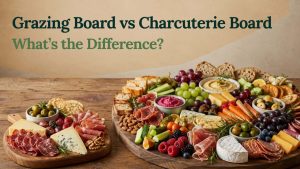
Grazing boards and charcuterie boards often look similar, but they are not quite the same. Here is the real difference — and what it means when choosing or making the wooden board itself.

Grazing boards and charcuterie boards often look similar, but they are not quite the same. Here is the real difference — and what it means when choosing or making the wooden board itself.
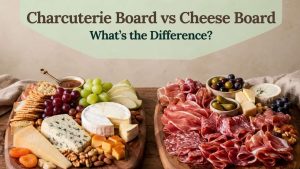
If you put a cheese board and a charcuterie board next to each other, there is a good chance the wooden boards themselves could be exactly the same. That is…

Do you really need a juice groove on a cutting board? Here is when I add one, when I leave the board flat, and what I consider before routing it.
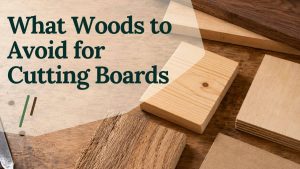
Not every hardwood belongs in the kitchen. Here are the woods I would avoid for cutting boards, why they can cause problems, and what I would use instead.
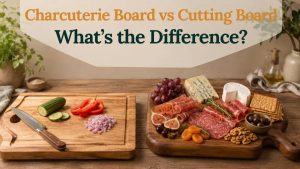
Charcuterie boards and cutting boards can look almost identical, but they are usually built for different jobs. Here is how I choose between them and when one board can do both.
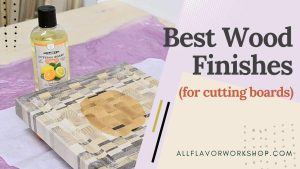
A good finish makes a cutting board look better, feel smoother, and handle daily use without drying out or soaking up water. In this guide I’ll cover the best food-safe finishes for cutting boards (oil, oil + wax blends, and simple mineral oil), how I apply them in my shop, and how often you actually need to reapply to keep your boards looking great.
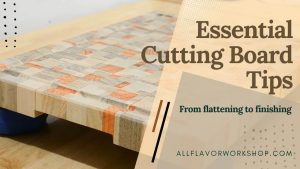
Build cleaner, flatter cutting boards—face, edge, and end grain—with shop-tested tips for milling, glue-ups, sanding, grooves, and finishing. Includes jig recommendations and troubleshooting.