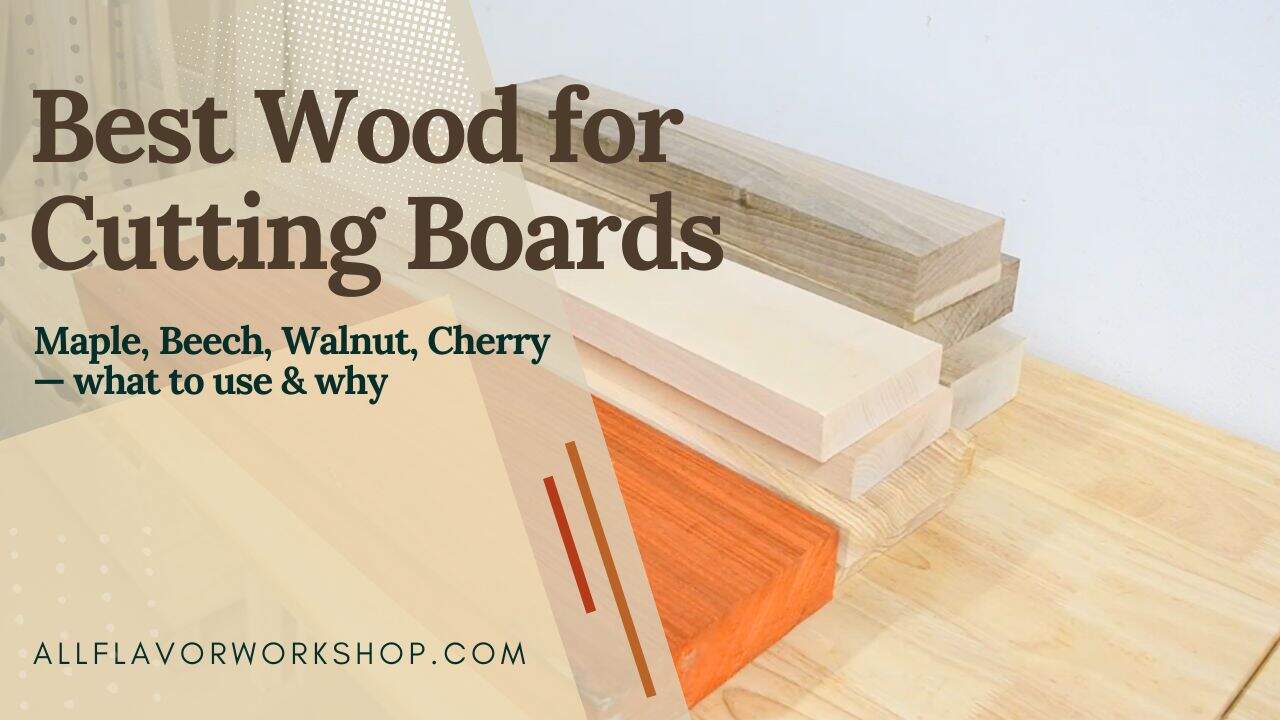
Best wood for cutting boards isn’t just about looks—it’s about suitability. Different regions have different options and prices, and not every nice offcut belongs in the kitchen. In my shop (EU), I usually reach for walnut, beech, ash, padauk, and sometimes maple. I like the contrast, they glue and finish well, and they hold up in daily use. Beech is common and budget-friendly here; walnut is more premium—and EU walnut isn’t the same as US walnut. If you can mill your own stock, even better—you’ll save a lot.
Price and availability matter, but food-contact safety and durability matter more. Some woods are hard to maintain, some don’t glue well, and a few can be toxic. This guide points you to woods that work for face-, edge-, and end-grain boards so you don’t waste time on a bad fit.
If you want the jigs I use for prepping, flattening, and finishing boards, then take them on my Woodworking Plans page—downloadable, step-by-step, and ready for your next build.
📌 Save THIS PIN to your Board on Pinterest!

What Makes a Good Cutting Board Wood
Keep it simple: you want wood that’s safe on food, kind to knives, easy to glue, and stable over time. Here’s my quick checklist.
Closed grain (smooth surface): Tight pores = fewer places for moisture and food to linger. Great choices: maple, beech, walnut, cherry. Use open-pore woods (e.g., ash, oak) as accents, not the main cutting face.
Hard, but not rock hard: Aim for roughly 900–1,500 Janka. Hard enough to resist dents, soft enough not to trash your knives. (Maple/beech sit nicely here; walnut is a touch softer but still excellent.)
Stable grain & straight stock: Straight, consistent grain moves less and glues better. If you can, pick quartersawn/riftsawn for extra stability.
Moisture & acclimation: Work around 8–10% MC and let boards acclimate in your shop before milling. It saves you from surprise movement and cupping later.
Glue-friendly: Standard waterproof PVA (Gorilla/Titebond III equivalents) is perfect. Oily exotics can fight glue—wipe mating faces with solvent and test first (or keep them as accents).
Allergens & safety: Some species (and their dust) can irritate skin/airways. When in doubt, stick to well-known food-safe hardwoods.
Finishing behavior: Woods that accept oil evenly make maintenance easy. You’ll get a nice “pop” with walnut, warm tone on maple/beech, and bold color on padauk accents.
Bamboo note (optional): Popular and stable, but it’s a laminated grass—glues/finishes differently than hardwood. Fine to use, just treat it as its own category.
Next up, I’ll walk through the top woods I actually use—what they look like, how they behave, and where they shine (face, edge, or end grain).

Top Woods (Pros, Cons, Best Use)
Here are the ten woods I reach for (or get asked about) most often. The quick rule: prefer closed-grain hardwoods for the working surface, and use bold, open-pore or very hard exotics as accents. Price and availability vary by region (I’m in the EU), so I’ve noted that too.
My short take:
Everyday, proven choices: Maple, Beech, Walnut, Cherry
Strong but more “manage with care”: Ash, White Oak (accent)
Popular / oily / dense (glue & bit sharpness matter): Teak, Acacia
Color accents (use sparingly): Padauk, Purpleheart
| Species | Grain | Janka (≈) | Best For | Pros | Watch-outs |
|---|---|---|---|---|---|
| Maple (Hard) | Closed | ~1450 | Face / Edge / End | Durable, smooth surface, finishes clean | Can look plain; clear dust to avoid burn marks |
| Beech | Closed | ~1300 | Face / Edge | Stable, affordable in EU, easy to mill | Moves with humidity—acclimate well before milling |
| Walnut (EU/US) | Mostly closed | ~1000 | Face / Edge / End accents | Premium look, great contrast, oils beautifully | Softer than maple—expect a few dents with heavy use |
| Cherry | Closed | ~950 | Face / Edge | Warm color, ages nicely, glues & sands well | Starts light—darkens over time (UV) |
| Ash (White) | Open | ~1320 | Edge / Accents | Strong, affordable, nice grain | Open pores—avoid as primary cutting surface |
| White Oak | Open | ~1360 | Accents / Perimeter | Tough, classic look, finishes well | Open pores; can trap moisture—keep off the main face |
| Teak | Closed / oily | ~1070 | Face / Edge | Moisture-resistant, stable, gentle on knives | Oily—wipe with solvent before glue; sharp bits help |
| Acacia (various) | Varies | ~1500–2200 | Face / Edge | Common in store-bought boards, striking color | Density varies; watch glue-up and sanding heat |
| Padauk | Closed | ~1970 | Accents / Patterns | Bold red/orange contrast, very durable | Dust can tint light woods—vacuum between grits |
| Purpleheart | Closed / very hard | ~1860 | Accents / Borders | Vivid color, tough edges | Can burn; use shallow passes and sharp cutters |
A few quick notes:
If you want one wood that just works, start with maple or beech.
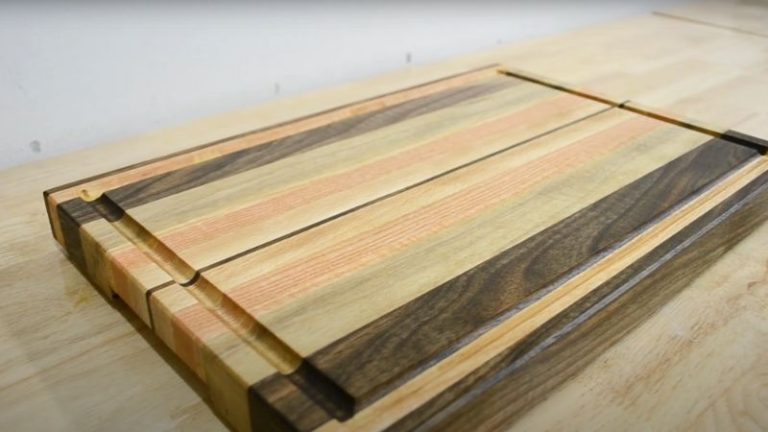
For color and contrast, add a strip of walnut or padauk—they pop next to maple/beech.
Keep open-pore woods (ash, oak) out of the main cutting surface; they’re great for borders or decorative stripes.
Oily or very hard woods (teak, acacia, purpleheart) look fantastic—just take shallow passes, keep bits sharp, and wipe oily faces with solvent before glue-up.

Woods to Avoid (or Use Carefully)
Not every board belongs in a kitchen. Here’s what I skip—or only use as small accents.
Very soft woods (pine, poplar, spruce): Dent easily, fuzz after sanding, finishes wear fast. Fine for shop jigs—not for a daily cutting surface.
Open-pore woods as the main surface (oak, ash): Beautiful grain, but the big pores can trap moisture/food. I keep them for borders/accents, not the work face.
Oily exotics that resist glue (some teak, ipe, certain rosewoods): Can starve joints or separate later. If you insist, wipe mating faces with solvent and do a test piece—better yet, use them as accents only.
Highly resinous/aromatic softwoods (cedar, fir): Strong smell, soft surface, and resins can bleed—poor for food prep.
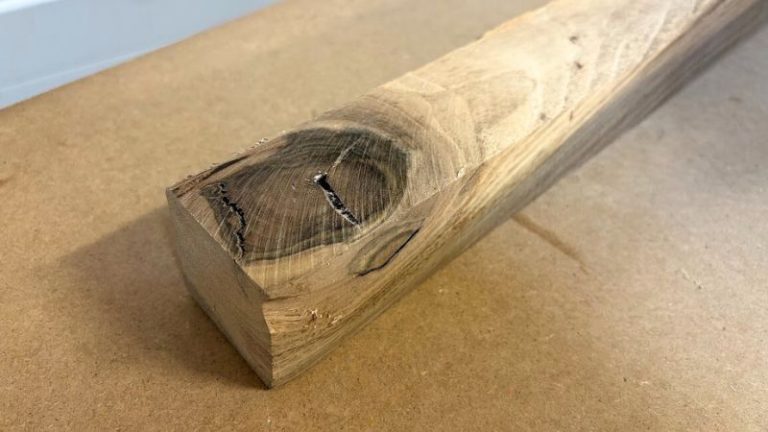
Spalted or punky wood: Looks amazing, but the decayed areas are soft and unpredictable—not ideal for a cutting surface.
Reclaimed/unknown stock (treated/painted): You don’t always know the chemicals, finishes, or contaminants involved. I avoid anything pressure-treated or previously coated.
Toxic/allergen-heavy species: Some woods and their dust can irritate skin/airways. For kitchen use, stick to well-known, food-safe hardwoods (maple, beech, walnut, cherry) and keep unusual exotics as small accents.
Simple rule: closed-grain hardwood for the working face, bold or tricky woods for accents—and when in doubt, pick maple/beech and get building.
Find This Blog Post Useful?
Join my newsletter to receive the latest news, tutorials, and project plans sent directly to your inbox!
Cost & Availability
Cost matters—but suitability comes first. Pick woods that make good cutting boards, then choose the most affordable options in your area and start there. If you’re just getting into boards, expect to ruin a few; it’s better to learn on budget-friendly stock before moving to premium walnut or exotic accents.
Start local: In the EU, beech is often the best value; walnut is premium. In the US, maple is a great, affordable staple.
Buy rough if you can mill: Rough lumber + your own milling usually beats S4S (Surfaced Four Sides) on price and gives you better control over thickness.
Think in yield, not just price per board: Straight grain and fewer defects = less waste and tighter glue lines.
Keep accents small: Use pricier exotics (padauk, purpleheart) as thin stripes—tiny cost, big visual pop.
Stock up smart: Offcuts from other projects make perfect test pieces for glue, finish, and color combos.
Simple approach: Choose suitable, closed-grain hardwoods first, buy the best-value species in your region, practice, then step up to premium boards once your process is dialed.
Face vs. Edge vs. End Grain — Wood Picks
Here’s how I choose woods by board type. Use closed-grain hardwoods for the working surface, save open-pore or very hard exotics for accents, and pick what’s affordable in your region.
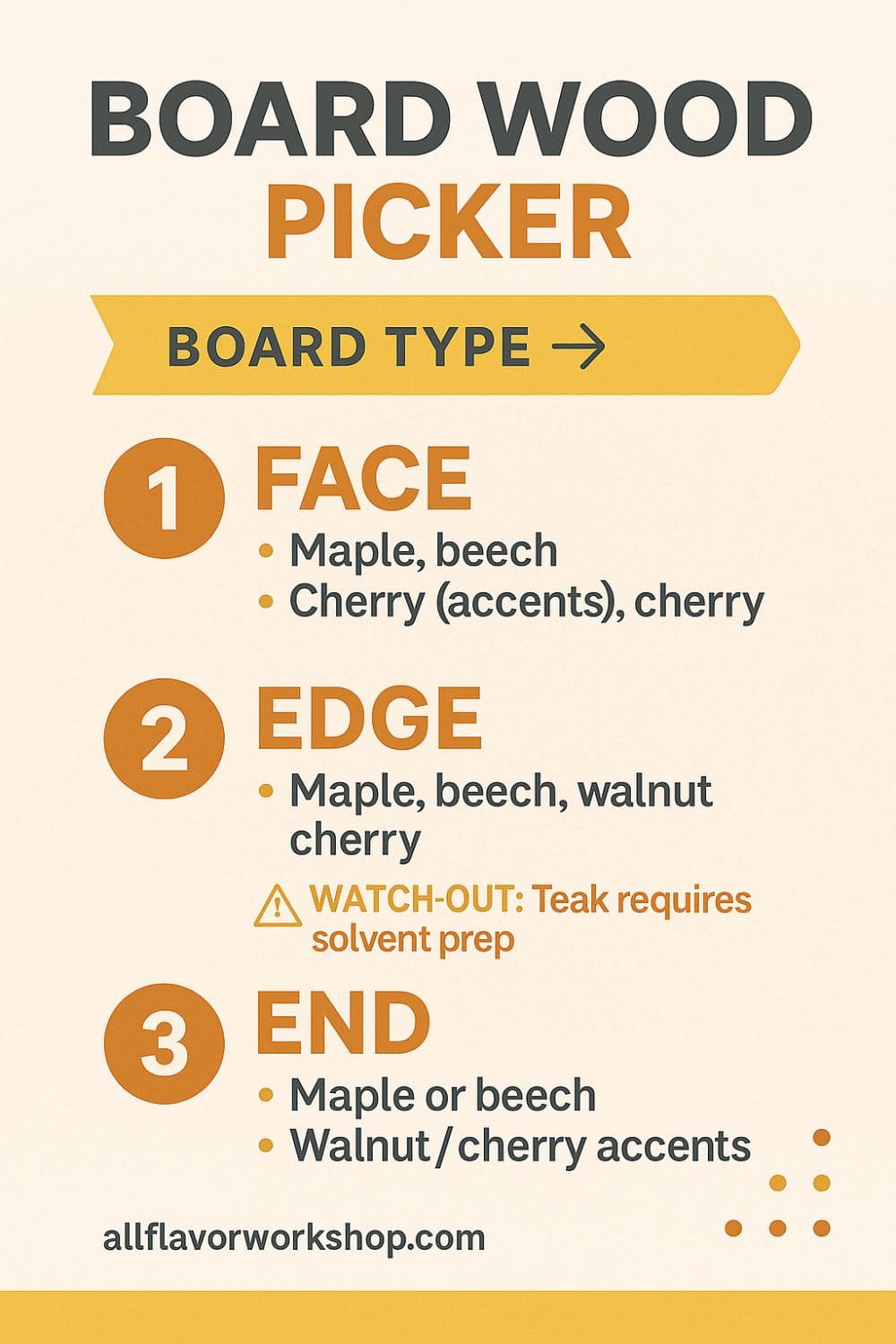
Face-grain: Fastest build and great for gifts. I like maple, beech, cherry, with walnut for contrast. Keep pores tight for easier cleaning.
Edge-grain: Daily workhorse—stable and clean looking. Maple, beech, walnut, cherry shine here, oak + ash accents; teak can work well too.
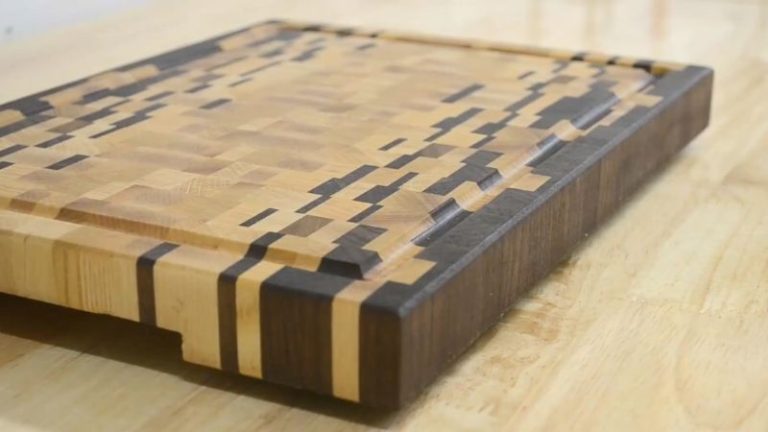
End-grain: Premium feel, knife-friendly. Go maple or beech for the field; add walnut/cherry accents. Avoid open-pore species for the main surface.
Below is the quick picker you can scan before you cut.
| Board Type | Recommended Woods | Why | Watch-outs |
|---|---|---|---|
| Face-grain | Maple, Beech, Cherry; Walnut accents | Quick to build, smooth surface, easy finishing | Open-pore woods (oak/ash) as main face can trap moisture |
| Edge-grain | Maple, Beech, Walnut, Cherry; Teak (glue-prepped), oak + ash accents | Stable, durable, clean look for everyday use | Prep oily woods (e.g., teak) with solvent before glue; avoid wild grain |
| End-grain | Maple, Beech; Walnut/Cherry accents | Knife-friendly, long-lasting, “premium” feel | Skip planers; flatten with router sled. Keep open-pore woods out of the field |
Finishing & Glue Considerations (by Wood Type)
Not all woods behave the same when you glue and finish them.
Closed-grain classics (maple, beech, cherry, walnut)
Glue: Standard waterproof PVA (Gorilla / Titebond III equivalents) bonds great. Joint clean faces and use even clamp pressure.
Finish: Take oil evenly; cherry can blotch a little—raise the grain and keep coats thin. Walnut pops fast; maple/beech warm slightly.
Open-pore woods (ash, white oak) — use mainly as accents/borders
Glue: PVA is fine; just avoid dusty pores at glue-up (vacuum first).
Finish: Big pores can hold moisture/food. That’s why I keep them off the primary cutting face; oil will highlight pores.
Oily/dense exotics (teak, some acacia, rosewoods)
Glue: Natural oils can weaken PVA joints. Before glue-up, wipe mating faces with solvent (e.g., acetone), let flash off, then glue. Do a quick test joint if you’re unsure.
Finish: They can look great with oil, but go thin coats and wipe promptly to avoid tackiness.
Very hard color accents (padauk, purpleheart)
Glue: PVA works well; keep edges freshly milled for best bite.
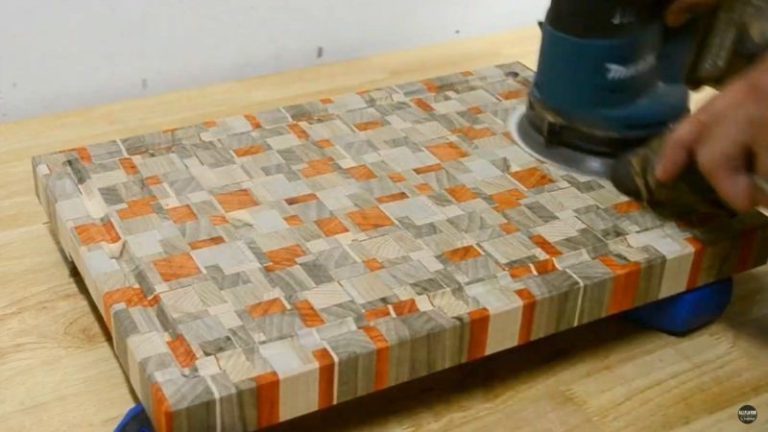
Finish: Stunning color, but their dust can migrate into light woods (maple/beech). Vacuum between grits, and sand light species last. Oil will deepen color contrast—nice if that’s the goal.
End-grain boards (any species)
Glue: End grain drinks glue. Spread a thin sizing coat (lightly wipe on, then a normal coat) before clamping, and watch for starved joints.
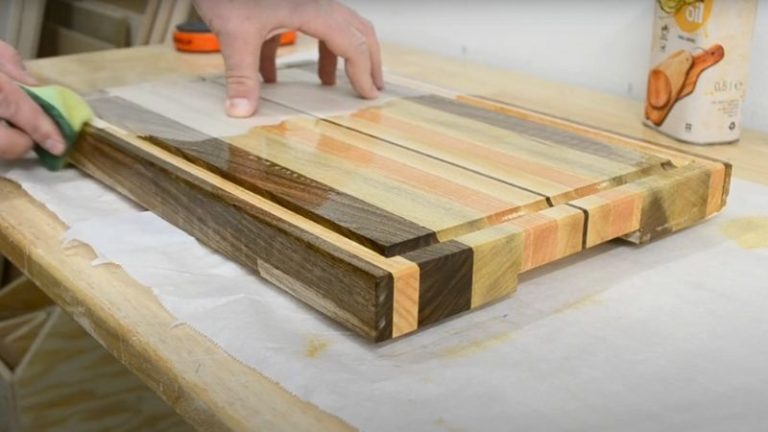
Finish: Expect more oil consumption—flood, soak, and repeat until saturation before wax.
Color matching & glue lines
Dark/light combos (walnut + maple) can make glue lines more visible if edges aren’t perfect. Aim for dead-straight, freshly jointed edges; avoid over-tightening (starves the joint).
If you see a faint glue line after surfacing, a very light, full-panel pass on the router flattening sled often evens it out before final sanding.
Odor/allergens
Some species have strong smell or irritant dust. If you notice a reaction, swap to a known food-safe hardwood and keep the exotic as a thin accent at most.
Recommended Jigs for Cleaner Results
Picking the right wood is half the story; the other half is working that wood cleanly. Different species behave differently—some tear out easier, some move more with moisture, some drink glue or oil. These simple jigs help you get the most from good woods (and avoid headaches with tricky ones), so your maple, beech, walnut, or cherry ends up flat, tight, and finished well.
- Table Saw Sled — Best for: perfectly square crosscuts and trimming panels after glue-up (tight joints show off maple/walnut contrasts without gaps).
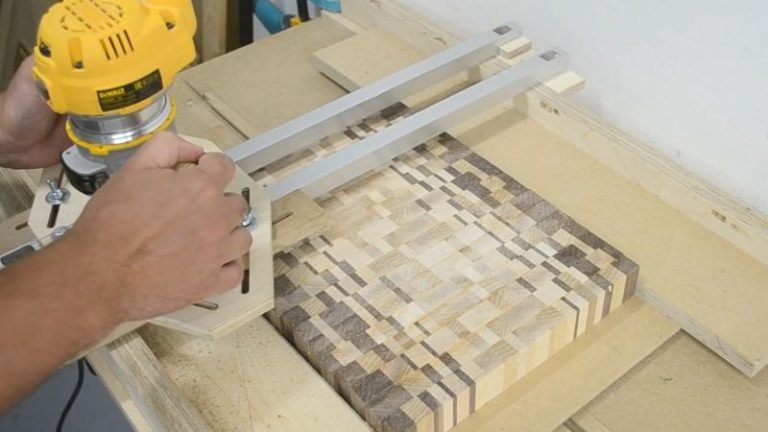
- Router Flattening Sled — Best for: flattening panels and all end-grain safely; avoids planer tear-out and keeps mixed-species boards dead flat.
- Jointer Sled — Best for: one dead-straight edge when you don’t have a jointer; great for removing live edges and prepping clean glue lines in harder woods.
- Juice Groove Jig — Best for: consistent, burn-free grooves—especially useful on dense or oily woods where router marks show easily.
- Handle Jig — Best for: centered, repeatable finger slots; avoids chip-out on brittle species and keeps pairs of handles identical.
- Router Table — Best for: controlled round-overs/chamfers; shallow passes prevent burns on maple and purpleheart, and stop tear-out at corners.
- DIY Sanding Block — Best for: crisp edges and quick touch-ups; perfect when a router would overdo it or when color dust (padauk) needs careful hand work.
See Best Jigs for Making Cutting Boards (And How to Use Them) for what each jig does, how to set it up, and links to the plans.
Wrap-Up
For me, the “best wood for cutting boards” starts with suitability and food safety—everything else (price, color, design) comes after. These boards touch food every day; the right wood helps you avoid mold, stains, odd smells, and finish headaches later. The ten woods above are safe, proven options for face-, edge-, and end-grain boards—just combine them thoughtfully and know each one’s upsides and trade-offs.
One advice, don’t grab a random plank from the garage just because you’re excited to start. Pick a proper closed-grain hardwood, let it acclimate, and glue/finish it the right way. You’ll get a cleaner result, it’ll be easier to maintain, and you’ll feel better about what’s touching your food. After that, let price and design guide your choices. Practice on budget-friendly species, then step up to premium woods once you’re comfortable with the process.
If you want the same jigs I use to prep, flatten, and finish boards cleanly, you’ll find them all on my Woodworking Plans page.
FAQ
1) What is the best wood for cutting boards?
Closed-grain hardwoods in the ~900–1,500 Janka range: maple, beech, walnut, cherry. They glue well, finish evenly, and are kind to knives.
2) Is oak good for cutting boards?
As a main cutting surface—not ideal. Oak is open-pored and can trap moisture/food. It’s fine as an accent/border, but keep the working face closed-grain.
3) Which wood is best for end-grain boards?
Maple or beech for the field, with walnut/cherry accents. Avoid open-pore species for the working surface; they’re better as borders.
4) Can I mix different wood species in one board?
Yes—just match moisture content, use glue-friendly species, and vacuum between grits to prevent color bleed (e.g., padauk into maple). Acclimate first, then glue.
5) Is bamboo a good choice?
Bamboo works and is stable, but it’s a laminated grass, not hardwood. It machines differently and can be harder on edges. Treat it as its own category.
6) What glue and finish should I use?
Waterproof PVA (Gorilla/Titebond III equivalents) and a food-safe oil (Clark’s, Belinka, or plain mineral oil), followed by a light beeswax + oil top coat. End grain drinks more—expect extra coats. If you’re considering linseed oil, read: Is Linseed Oil Food Safe? (Raw vs Boiled).
📌 Save THIS PIN to your Board on Pinterest!