
Cutting board sizes and thicknesses can make a much bigger difference than they may seem at first. When you are planning a new cutting board, the dimensions affect not only how the board looks, but also how comfortable it is to use, how stable it feels on the counter, how heavy it is to move around, and even how practical it is to build in the workshop.
Over time, I have found that the “best” cutting board size is not really just about following one standard dimension. It depends on what the board is for, how much working space you want, how thick and solid you want it to feel, and what tools or jigs you are using during the build.
In this guide, I’ll go through the most useful cutting board size and thickness considerations, look at what works well for different types of boards, and share the dimensions I personally like using for a solid everyday kitchen board.
And if you are also deciding what kind of cutting board you want to build, have a look at my Types of Cutting Boards (And How to Make Them) article.
Table of Contents
- Why Cutting Board Size and Thickness Matter
- What Is a Good Size for an Everyday Cutting Board?
- Common Cutting Board Thicknesses and What They Feel Like
- How Board Purpose Changes the Best Dimensions
- My Preferred Cutting Board Size (And Why I Like It)
- Layout Tips Before You Build
- How Tool Limits Can Affect Cutting Board Dimensions
- Common Mistakes When Choosing Cutting Board Dimensions
- Wrap-Up
- FAQ
📌 Save THIS PIN to your Board on Pinterest!
Why Cutting Board Size and Thickness Matter
The size and thickness of a cutting board affect much more than just the final look. They change how the board feels in everyday use, how stable it is on the counter, how much workspace you have, and how solid or premium the board feels in your hands.
A board that is too small can feel limiting very quickly, especially if you actually use it for regular kitchen prep and not just for serving. On the other hand, a board that is too large or too heavy can become awkward to move, clean, or store. Thickness works in a similar way. A thinner board may be lighter and easier to handle, while a thicker board usually feels more solid, more durable, and a bit more premium.
This also matters from the builder’s side. The dimensions you choose affect how much material you need, how you lay out the glue-up, and whether the finished board fits comfortably through your machines or still works with something like a Router Flattening Jig. So even though the board size may sound like a small decision at the start, it shapes a lot of the project later on.
NOTE: Good cutting board dimensions are not just about what looks nice. They should also match how the board will be used, how it will be built, and how practical it will be in a real kitchen.
What Is a Good Size for an Everyday Cutting Board?
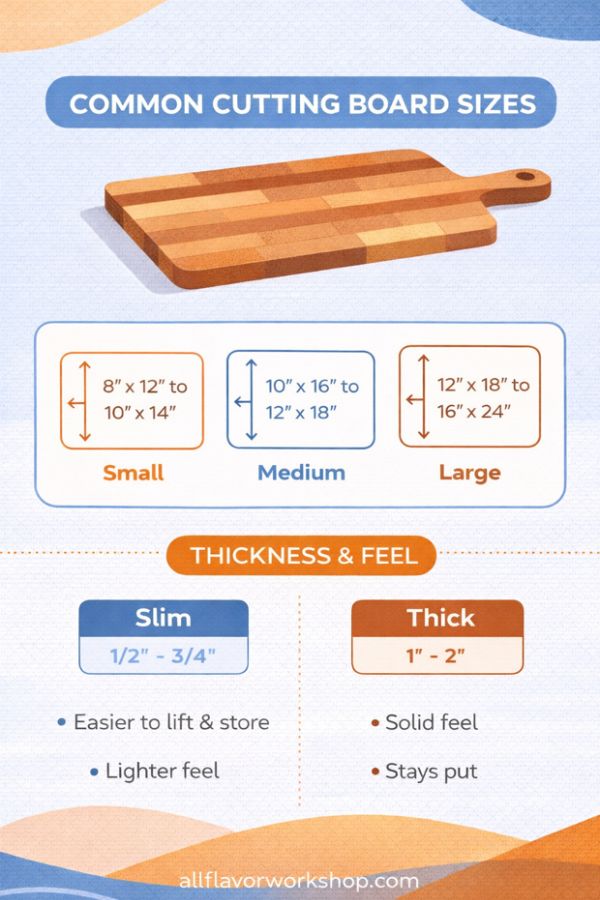
For an everyday kitchen cutting board, I think the best size is one that gives you enough space to actually work, but still feels manageable to move and clean. If the board is too small, it quickly becomes frustrating once you start cutting larger vegetables, meat, or several ingredients at once. If it is too large, it can become heavy and awkward, especially in a normal kitchen.
That is why I usually see the sweet spot somewhere in the medium-to-large range. You want a board that gives you real working space and feels stable on the counter, but still fits the kitchen well. For many people, that means choosing a size that is large enough for daily prep, not just a small decorative board.
This is also one of the reasons I personally prefer larger boards over smaller ones. Smaller boards can definitely look nice, and they work well for serving or quick light tasks, but for a proper kitchen board I usually want more room to work and a stronger overall feel.
TIP: If you are building one main cutting board for the kitchen, it usually makes sense to lean a little bigger rather than too small.

Common Cutting Board Thicknesses and What They Feel Like
Thickness changes the feel of a cutting board more than many people expect. Even if two boards have a similar length and width, the thicker one will usually feel more solid, more stable, and a bit more premium.
Here is a simple way to think about it:
- Around 2 cm – 3/4″
Lighter and easier to handle, but usually feels more like a lighter-duty board or a simpler serving-style piece. - Around 2.5 to 3 cm – 1″ to 1 1/4″
A very practical middle ground. Thick enough to feel solid, but still not too heavy for everyday use. - Around 3.5 cm – 1 3/8″ and above
This is where the board starts to feel much more substantial and premium. It has more presence on the counter, handles pressure better, and usually feels like a more serious kitchen board.
That is one of the reasons I personally like thicker boards. They feel sturdier, more stable, and better suited for everyday kitchen work. Of course, that also adds weight, so there is always a balance between comfort, durability, and the overall feel you want.
Thicker is not automatically better for every build. It depends on whether you want a lighter board, a serving board, or a heavier all-purpose kitchen board.
How Board Purpose Changes the Best Dimensions
The best cutting board dimensions depend a lot on what the board is actually meant to do. A board for everyday kitchen prep usually benefits from more space and a sturdier thickness, while a serving board or a smaller decorative build can work well with lighter and slimmer dimensions.
That is why I would not look for one “perfect” cutting board size that fits every situation. It makes more sense to think about the purpose first, and then choose dimensions that support that use.
For example, if you want a board mainly for serving, presentation, or smaller kitchen tasks, you can usually go smaller and thinner. But if the board is meant to be your main kitchen work surface, it helps a lot to have enough room for ingredients, a stable feel on the counter, and enough thickness to handle regular use comfortably.
| Board purpose | Recommended size direction | Recommended thickness direction | Why it works |
|---|---|---|---|
| Small serving board | Smaller and easier to handle | Thinner to medium | Better for presentation, lighter handling, and quicker builds |
| Everyday kitchen cutting board | Medium to large | Medium to thick | Gives enough workspace and feels more stable during regular prep |
| Heavy-duty prep board | Larger working area | Thicker | Feels sturdier, more premium, and better suited for repeated kitchen use |
| Decorative or gift board | Depends more on design | Thin to medium | Usually prioritizes appearance, style, and easy handling over heavy-duty use |
So before choosing the final dimensions, I think it helps to ask one simple question: Will this board be mainly decorative, mainly practical, or both? Once that is clear, the right size and thickness are usually much easier to choose.
My Preferred Cutting Board Size (And Why I Like It)
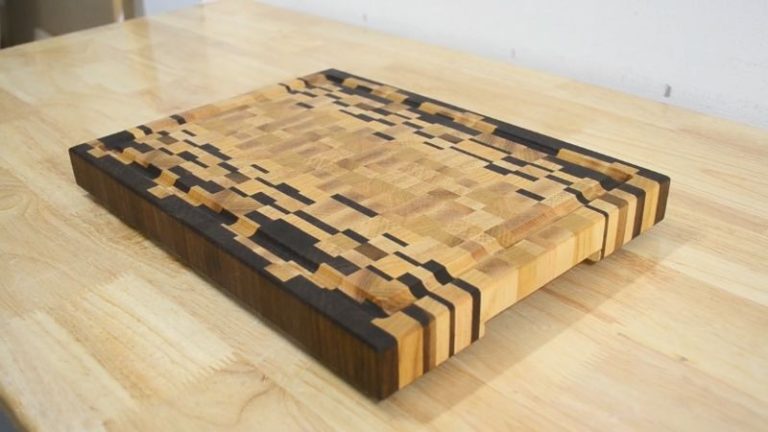
When I make a cutting board for real kitchen use, I usually like to stay around 52 × 30 × 3.5 cm (about 20 1/2″ × 11 3/4″ × 1 3/8″). Over time, that has become one of my favorite setups because it gives me a really good balance between usable workspace, sturdiness, and overall feel.
For me, that size is large enough to be practical on the kitchen counter and comfortable for everyday prep, but still manageable to move around. I do not really enjoy boards that feel too small once you start cutting for real. A proper kitchen cutting board should give you enough space to work without feeling cramped right away.
I also like the 3.5 cm (about 1 3/8″) thickness because it makes the board feel solid and more premium. It has enough mass to feel stable, it handles pressure well, and it does not feel like a light decorative board. That is the kind of feel I personally want from a kitchen board.
From the workshop side, those dimensions also make sense for how I build. They fit well with the way I prep stock, and they still work with my machines and jigs. If I go a little wider, I already know I may need to finish the board with my Router Flattening Jig, so that is part of the decision too.
So while I would not say this is the one perfect size for everyone, it is definitely the range I come back to when I want a board that feels practical, sturdy, and worth using every day.
TIP: If you want one main board for the kitchen, I think it makes more sense to build something that feels properly usable and solid, rather than going too small just to save a bit of material.

Layout Tips Before You Build
Before gluing anything up, I think it helps to spend a bit of time on the layout. This is where you can still make easy changes, save material, and avoid ending up with a board that feels off once it is finished.
A few practical things I would think about before building:
- Leave enough working space
If the board is meant for real kitchen use, make sure the final layout gives you enough surface area to actually prep food comfortably. - Think about thickness from the start
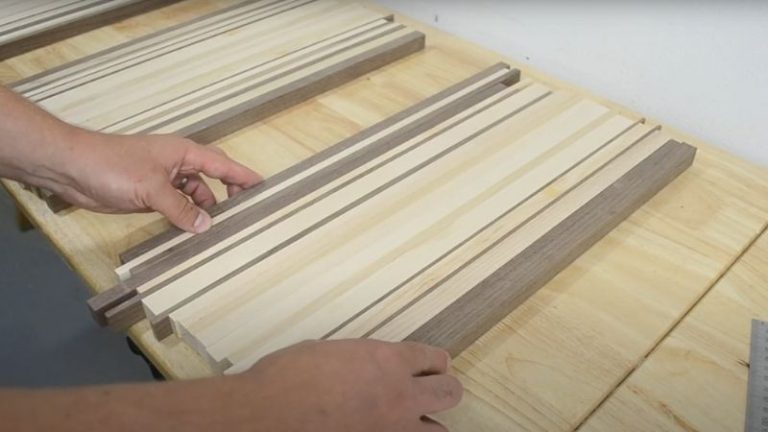
The final board will usually end up a bit thinner after flattening and sanding, so it helps to plan for that early. - Plan your glue-up around usable strip widths
It is easier to build a clean board when the layout matches the stock you already have, instead of forcing exact dimensions too early. - Check how the finished size fits your tools
This matters more than it may seem. If the board ends up too wide for your planer, you already want to know that before the glue-up and have a plan, whether that means adjusting the size or using a Flattening Jig. - Think about the final use, not just the build
A board may look good on the bench, but still feel too small, too wide, or too heavy once it is actually in the kitchen.
For me, this part is not just about appearance. A good layout makes the whole project easier to build and helps the final board feel more practical once it is done.
How Tool Limits Can Affect Cutting Board Dimensions
This is something that matters a lot when you actually build cutting boards, but it does not get mentioned often enough. The final board size is not only about what looks good or what would be nice to have in the kitchen — it is also shaped by the limits of your tools.
- For example, the width of your planer can directly affect how wide you want the board to be before glue-up or before final flattening. If the finished board is too wide for the planer, that does not automatically mean it is a problem, but you need to know it in advance and have another method ready. In my case, that usually means finishing the board with Flattening Jig.
- The same goes for your table saw setup, sleds, clamps, or even the amount of support you have during glue-up. A cutting board may look perfectly reasonable on paper, but if it becomes awkward to flatten, trim, or handle safely in the workshop, that is worth thinking about before you commit to the final size.
That is one reason I like practical dimensions that work not only in the kitchen, but also in the shop. A good cutting board size should feel right for the use, but it should also be realistic for the way you actually build.
TIP: Before locking the final dimensions, think through the whole process — glue-up, flattening, trimming, sanding, and handling — not just the finished look.
Common Mistakes When Choosing Cutting Board Dimensions
Choosing the dimensions sounds simple at first, but this is one of the places where small decisions can affect the whole build. These are some of the most common mistakes I would watch out for:
- Making the board too small for real kitchen use
A small board may look fine at first, but once you start using it, it can feel limiting very quickly. - Choosing thickness only by appearance
A board can look great on paper, but if it is too thin, it may not feel as stable or solid as you want in everyday use. - Ignoring how heavy the board will become
Thicker and larger boards feel more premium, but they also get heavier. That can be a good thing, but only up to the point where the board still feels practical. - Not thinking about the final use early enough
A serving board, a decorative board, and a main kitchen cutting board do not all need the same dimensions. - Forgetting about tool limits
It is easy to design a board around the ideal finished size and forget whether it still fits through the planer or works with your flattening setup. - Not leaving room for flattening and sanding
The final dimensions usually shrink a bit during the build, so it helps to plan for that from the start.
| Mistake | What happens | Better approach |
|---|---|---|
| Board is too small | Feels cramped during real kitchen prep | Choose dimensions that give enough working space for everyday use |
| Board is too thin | Can feel lighter or less substantial than expected | Match the thickness to the type of board and the feel you want |
| Board is too large or heavy | Harder to move, clean, or store | Balance premium feel with practical handling |
| Final size ignores tool limits | Flattening and machining become more difficult later | Think through planer width, jig capacity, and workshop setup before glue-up |
| No allowance for final cleanup | Finished board ends up smaller than planned | Leave room for flattening, trimming, and sanding from the start |
Wrap-Up
Over time, I have found that choosing the right cutting board dimensions is not only about looks. It affects how the board feels in your hands, how comfortable it is to use on the counter, how stable it stays during prep, and even how practical the whole build is in the workshop.
That is one of the reasons I keep coming back to slightly larger, thicker boards. I like a board that gives me enough room to work, feels solid, and has that more premium presence in the kitchen. And from what I have seen, that is also very close to what a lot of people want when they are looking for a serious everyday cutting board — not something tiny or overly decorative, but something they will actually enjoy using.
Of course, there is no single size that fits every build. But if the board matches its purpose, feels practical in the kitchen, and works with the way you build, you are usually on the right track. And if you want to explore more jigs, techniques, and ideas around cutting board builds, take a look at my Best Jigs to Make Cutting Boards guide.
FAQ
1. What is a good size for an everyday cutting board?
A good everyday cutting board is usually large enough to give you comfortable working space, but still manageable to move and clean. For many builds, a medium-to-large board works best, especially if you want to use it regularly for real kitchen prep rather than only for serving.
2. How thick should a cutting board be?
That depends on the type of board you want. Thinner boards are lighter and easier to handle, while thicker boards usually feel more solid, stable, and premium. For a serious everyday kitchen board, a medium to thicker build often makes the most sense.
3. Are thicker cutting boards better?
Not always, but they often feel sturdier and more substantial. A thicker board can handle pressure well and stay more stable on the counter, but it also becomes heavier. The best choice depends on whether you want a lighter board, a serving board, or a heavier all-purpose kitchen board.
4. What size cutting board should I make?
Start with the board’s purpose. If it is mainly for serving, you can usually go smaller and lighter. If it is meant for daily kitchen prep, it helps to choose dimensions that give you enough room to work and enough thickness to feel solid in use.
5. Do tool limits matter when choosing cutting board dimensions?
Yes, definitely. The final board size should not only suit the kitchen, but also your workshop setup. Planer width, flattening method, glue-up handling, and sanding all affect how practical certain cutting board dimensions will be during the build.
