Cutting Board Feet vs No Feet: Grip, Hygiene, and Airflow
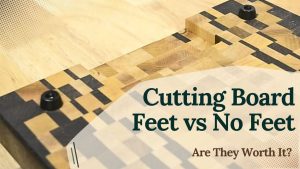
Not sure if you should add rubber feet to your cutting board? Here’s the practical comparison—grip, hygiene, and airflow—plus quick install tips and when I skip feet.

Not sure if you should add rubber feet to your cutting board? Here’s the practical comparison—grip, hygiene, and airflow—plus quick install tips and when I skip feet.
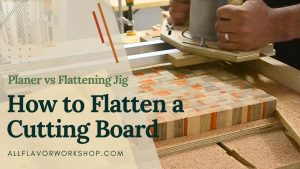
Trying to flatten a cutting board after glue-up? Here’s when a planer is the fastest option — and when a router flattening jig is the safer choice for wide or twisted boards — with simple steps for both methods.
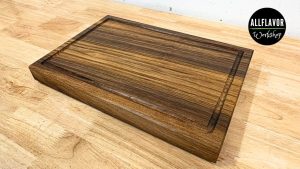
Want a cutting board project that’s actually beginner-friendly? This simple walnut face grain cutting board is a clean start-to-finish build: cut, glue, sand, and finish with a food-safe oil — no epoxy, no fancy extras.
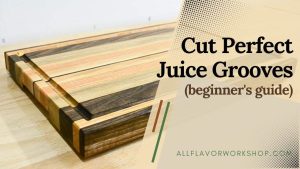
Learn how to cut a perfect juice groove in a cutting board using a router, a simple jig, and a few careful passes. This step-by-step guide covers ideal groove depth and offset, router bit selection, setup tips, and how to avoid burn marks so your boards look clean and professional.
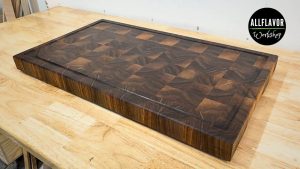
Learn how to make a DIY end grain cutting board step by step. This advanced woodworking project will teach you how to cut, glue, flatten, and finish a durable board that looks incredible and lasts for years.

Face vs. edge vs. end grain cutting boards—see the differences, pros/cons, tools you’ll need, and when to choose each. Simple guidance for beginners with links to builds, jigs, and plans.

Find the best woods for cutting boards—maple, walnut, beech, cherry, and more. Grain, hardness, food-safety, price, and which woods fit face, edge, or end-grain builds.
Build cleaner, flatter cutting boards—face, edge, and end grain—with shop-tested tips for milling, glue-ups, sanding, grooves, and finishing. Includes jig recommendations and troubleshooting.