
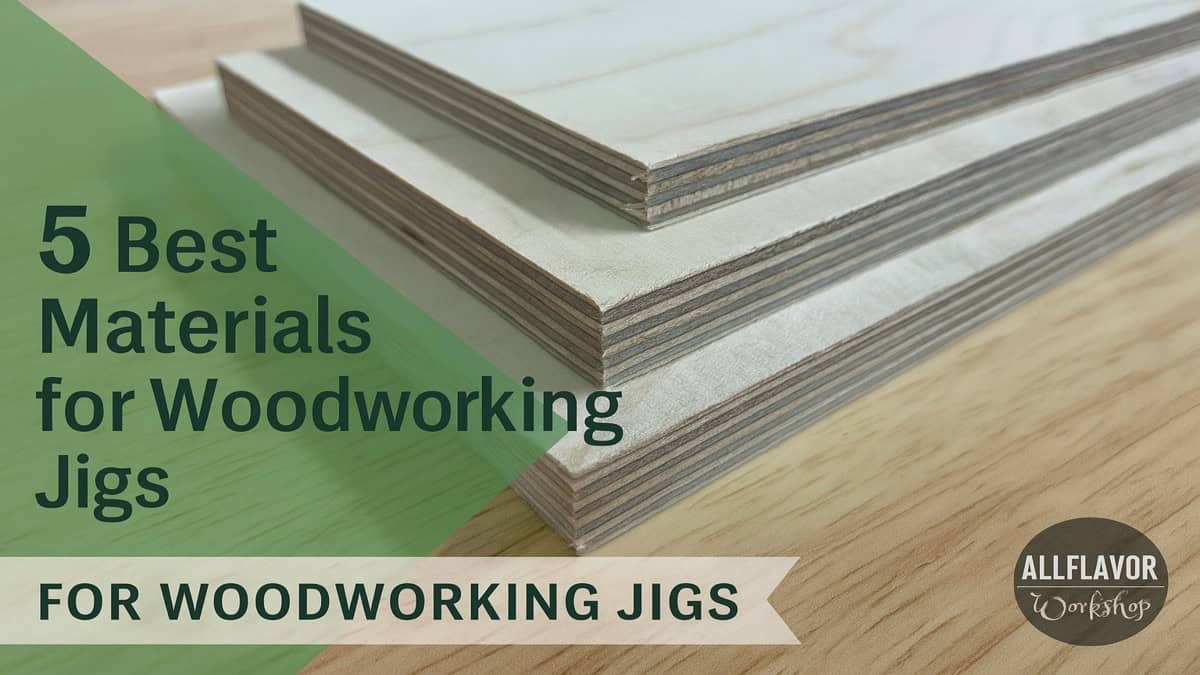
The materials you choose for building woodworking jigs can make a big difference in how accurate, durable, and enjoyable they are to use.
When I first started building woodworking jigs, it wasn’t that I didn’t care about materials—I just didn’t know much about them. I’d grab whatever scrap plywood or MDF I had around and try to make it work. Sometimes it did. But other times… let’s just say sometimes things didn’t last or they didn’t stay square for very long.
Looking back, an article like this would’ve made my life a lot easier.
Understanding how each material behaves—how it cuts, how it holds screws, whether it stays flat—helps you decide where to use it in your jig builds. Some woods are perfect for bases, others for runners or fences, and a few are better left on the scrap pile.
🔗 If you’re just starting out, check out these 5 essential woodworking jigs for beginners—they’re simple to build and a great way to put the right materials into practice.
In this guide, I’ll walk you through the best materials for woodworking jigs—what I use in my own shop, what I avoid, and how to choose the right one depending on your jig’s purpose.
Table of Contents
- Top Woods for Jig Building
- Baltic Birch Plywood
- MDF (Medium-Density Fiberboard)
- HDF (High-Density Fiberboard)
- Hardwood (Maple, Beech, Oak)
- Softwood (Pine, Spruce)
- Other Useful Materials for Jigs
- Acrylic
- UHMW
- Aluminum
- Materials to Avoid
- Material Comparison Table
- Tips for Choosing the Right Material Based on Jig Type
- Frequently Asked Questions
- Final Thoughts
1. Top Woods for Jig Building
These are the most commonly used materials for DIY woodworking jigs. Each has its own pros and cons depending on the type of jig you’re making, your tool setup, and your budget.
1. Baltic Birch Plywood
What it is: A high-quality plywood made with multiple thin veneers and very few voids. Often 7–13 plies thick, even in 1/2″ or 3/4″ sheets (9mm, 12mm).
Why it’s great:
- Extremely stable and resistant to warping
- Holds screws well
- Smooth, uniform surface
- Long-lasting—great for shop jigs you’ll use often
Best for:
Crosscut sleds, router jigs, fences, templates—anything that needs to stay square and true over time.
I use Baltic birch for most of my “permanent” jigs – great for bases and fences. It’s a little more expensive, but totally worth it when accuracy matters.
2. MDF (Medium-Density Fiberboard)
What it is: A smooth, dense panel made from wood fibers and resin, pressed under high pressure.
Why it’s great:
- Flat, consistent thickness
- Cuts cleanly—great for templates and guides
- Inexpensive and widely available
Watch out for:
- Doesn’t hold screws well without splitting
- Not moisture-resistant (can swell if exposed to water)
Best for:
Router templates, dado jigs, circle jigs, sacrificial fences
I like using MDF for parts of jigs that won’t take heavy stress—especially for quick templates or adjustable components, like this Adjustable Router Dado Jig I use in my workshop.
3. HDF (High-Density Fiberboard)
What it is: Similar to MDF but even denser and more durable.
Why it’s great:
- Better wear resistance than MDF
- Still easy to machine
- Holds finer edges well
Best for:
Thin inserts, sub-fences, sliding parts (like runners), or components where you need a clean edge over time.
4. Hardwood (Maple, Beech, Oak)
Why it’s great:
- Extremely durable and long-lasting
- Ideal for precision runners and stops
- Doesn’t flex or wear out easily
Best for:
Miter slot runners, pins, knobs, stops, and sliding parts that need to fit tightly
I often use beech or oak for runners, pins and stops—they slide well and last much longer than softwood or MDF.
5. Softwood (Pine, Spruce, Fir)
Why it’s okay sometimes:
- Cheap and available
- Great for prototyping or temporary jigs
- Easy to cut, drill, glue
Downsides:
- Warps easily
- Doesn’t stay square over time
- Prone to splitting
Best for:
Quick glue-ups, test builds, or parts that don’t need precision
2. Other Useful Materials for Jigs
While most woodworking jigs are built from plywood or MDF, there are a few other materials that can really level up your builds—especially for runners, fences, inserts, or specialized applications.
UHMW Plastic (Ultra-High Molecular Weight Polyethylene)
What it is: A low-friction, wear-resistant plastic ideal for parts that slide or rub against other surfaces.
Why it’s great:
- Doesn’t swell or warp
- Glides smoothly in miter slots (no lubrication needed)
- Extremely durable over time
- Won’t damage tools if contacted accidentally
Best for:
- Table saw sled runners
- Sliding panels and stops
- Non-stick contact surfaces
Honestly, I don´t use UHMW that much, but if I were it would be for runners—it’s more stable than hardwood and requires almost no maintenance, especially in builds like my table saw crosscut sled where smooth movement really matters.
Acrylic (Plexiglass)
What it is: A transparent plastic sheet that cuts cleanly and stays flat.
Why it’s great:
- See-through—great for visibility during routing
- Smooth and stable
- Available in many thicknesses
- Can be laser-cut or routed precisely
Best for:
- Router baseplates
- Circle jigs
- Alignment tools
- Top plates where visibility is helpful
Anywhere you want to have good visibility and see though.
Aluminum (Extrusions or Flat Bar)
What it is: Lightweight metal commonly used in T-track systems and jig fixtures.
Why it’s great:
- Straight, strong, and rigid
- Doesn’t warp or bend under normal stress
- Works well for fences, rails, and guides
- Compatible with knobs and bolts for adjustment
Best for:
- Fence rails
- Track saw setups
- Adjustable stops and arms
- T-track systems for clamps
If you’re making a jig that needs adjustability or repeatable movement, aluminum track and knobs are hard to beat.
3. Materials to Avoid
Not all wood or sheet material is jig-worthy. Some options might seem good at first glance—cheap, easy to cut, readily available—but they can cause more frustration than they’re worth.
Here are the materials I recommend avoiding (or using with caution) when building woodworking jigs:
Particle Board
Why not:
- Crumbles easily, especially at screw points
- Poor edge strength
- Prone to chipping, splitting, and delaminating
- Doesn’t hold fasteners well
Where it fails:
Anything that needs precision, repeatable movement, or clamping pressure
Warped or Twisted Plywood
Why not:
- A flat base is everything when it comes to jigs
- Warped material introduces inaccuracy from the start
- Hard to clamp square and may never sit flush
Tip:
Check sheet goods by laying them flat on a known level surface. If it rocks or bows—skip it.
Reclaimed Softwoods (Unless You Know What You’re Doing)
Why not:
- Can contain hidden nails, screws, or voids
- Often inconsistent in thickness or grain structure
- Prone to warping if not kiln-dried
Use only if:
You’ve milled them flat and know they’re clean, straight, and stable
I’ve tried using all three of these at some point. And it is a lottery. Sometimes it works, and sometimes it doesn’t. You might end up with a great jig or you might end up remaking it a week later. It’s just not worth the shortcut.
4. Material Comparison Table
The table below compares the best materials for building woodworking jigs.
| Material | Cost | Stability | Durability | Screw Holding | Best Used For |
|---|---|---|---|---|---|
| Baltic Birch Ply | 💰💰💰 | ⭐⭐⭐⭐ | ⭐⭐⭐⭐ | ⭐⭐⭐⭐ | Bases, fences, structural jigs |
| MDF | 💰 | ⭐⭐⭐ | ⭐⭐ | ⭐⭐ | Templates, low-stress jig parts |
| HDF | 💰💰 | ⭐⭐⭐⭐ | ⭐⭐⭐ | ⭐⭐ | Inserts, thin panels, smooth surfaces |
| Hardwood (Maple) | 💰💰💰 | ⭐⭐⭐⭐ | ⭐⭐⭐⭐ | ⭐⭐⭐⭐ | Runners, stops, knobs |
| Softwood (Pine) | 💰 | ⭐ | ⭐ | ⭐⭐ | Prototypes, temporary jigs |
| UHMW Plastic | 💰💰💰 | ⭐⭐⭐⭐ | ⭐⭐⭐⭐ | ❌ (no screws) | Runners, sliding parts, low-friction contact |
| Acrylic | 💰💰 | ⭐⭐⭐ | ⭐⭐ | ❌ (can crack) | Router bases, visibility jigs |
| Aluminum | 💰💰💰 | ⭐⭐⭐⭐ | ⭐⭐⭐⭐ | ✅ (with bolts) | T-tracks, fences, adjustable jigs |
5. Tips for Choosing the Right Material Based on Jig Type
Not every jig needs to be robust and built like a tank—but knowing where to use the right material makes a big difference in how well your jig performs over time.
Here’s how I think about it when deciding what to use:
Use Baltic Birch or Hardwood for Anything That Needs to Stay Square
If the jig is structural—like a crosscut sled or router table fence—use Baltic birch or hardwood. These materials are durable, stay flat, and can handle a lot of use without flexing or breaking down.
Use MDF or HDF for Templates and Disposable Guides
MDF is perfect for routing templates, dado guides, sliding components, and any quick layout jig where precision matters but long-term durability doesn’t. I use MDF when I need something fast and clean, knowing I can always rebuild it if it wears out.
Use UHMW or Hardwood for Sliding Runners
If your jig needs to slide in a miter slot or across a fence, don’t use softwood—it wears out fast. UHMW plastic or straight hardwood like maple works best here. It holds its shape, moves smoothly, and won’t wobble after a few uses.
Use Aluminum or Acrylic for Adjustable Parts
For parts that move, pivot, or get adjusted often—like router jigs, guide rails, or track saw setups—aluminum and acrylic can be a great fit. I usually pair these with knobs and bolts to create easy fine-tuning.
Avoid Warped, Weak, or Damaged Materials for Jig Bases
A jig is only as accurate as its foundation. If your base is warped, every cut will be too. Always choose something flat and solid, even if it costs a bit more.
I’ve learned over time that spending a little more on the right material saves me hours of frustration and possible rework—and keeps my jigs working for years instead of weeks.
6. Frequently Asked Questions
What is the best wood for woodworking jigs?
Baltic birch plywood is one of the best overall choices. It’s flat, stable, strong, and holds screws well—perfect for most jigs you’ll use regularly.
Is MDF good for woodworking jigs?
Yes, MDF is great for templates and quick builds. It’s smooth and easy to cut, but it doesn’t hold screws well and isn’t moisture-resistant, so avoid using it for parts that take stress or flex.
What’s the difference between MDF and HDF?
Both are fiberboards, but HDF is denser and more durable than MDF. Use HDF when you want a smoother finish or cleaner edges, especially for thin parts or insert plates.
Can I use softwood like pine to make jigs?
You can—but it’s not ideal. Softwood is prone to warping and doesn’t stay square over time. It’s okay for prototypes or one-off jigs but not for anything long-term.
What material should I use for miter slot runners?
The best materials for runners are UHMW plastic or straight hardwood like maple or beech. They slide smoothly, won’t warp, and stay tight in the slot.
Can I use reclaimed wood for jigs?
Only if you know it’s dry, straight, and free of nails or defects. Reclaimed wood often has inconsistent density and hidden fasteners, which can damage your tools or throw off accuracy.
7. Final Thoughts
Choosing the right material for your woodworking jigs can make a bigger difference than you might expect. I always had a general idea that material mattered, but I was genuinely surprised over time just how much it affects precision, durability, and ease of use.
These days, I reach for Baltic birch plywood for most of my go-to jigs—especially when I want something solid that stays square. For quick templates or lightweight components, MDF still has its place. And when it comes to runners or high-wear parts, I prefer using hardwoods like oak, which I’ve found to be reliable, smooth, and long-lasting.
I also really like incorporating aluminum, especially for guide rails or adjustable fences. It keeps things straight, strong, and easy to fine-tune, which is a big plus in the shop.
🛠️ If you’re just getting into building jigs, don’t stress about having the “perfect” materials. If you’re still figuring out what woodworking jigs are and how they help, this beginner’s guide breaks it down clearly.
Start with what you’ve got, learn what works for you, and keep improving from there. The more jigs you build, the more confident you’ll get—and before long, material choice will become second nature.
📌 Found this post useful and inspiring?
Ready to build it? Save THIS PIN to your Board on Pinterest!

