How to Make a Wooden Chess Board (Step-by-Step DIY Guide)
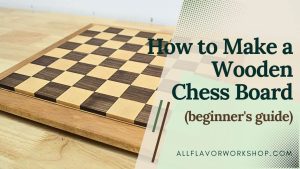
Learn how to make a wooden chess board step by step — from milling and glue-up to cutting clean squares, sanding flat, and applying a smooth finish that makes the pattern pop.

Learn how to make a wooden chess board step by step — from milling and glue-up to cutting clean squares, sanding flat, and applying a smooth finish that makes the pattern pop.
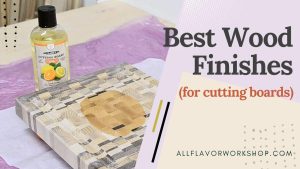
A good finish makes a cutting board look better, feel smoother, and handle daily use without drying out or soaking up water. In this guide I’ll cover the best food-safe finishes for cutting boards (oil, oil + wax blends, and simple mineral oil), how I apply them in my shop, and how often you actually need to reapply to keep your boards looking great.
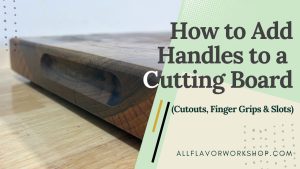
Handles make a cutting board much easier (and more comfortable) to pick up — especially bigger boards. In this guide, I’ll show the handle styles I use most (cutouts, finger grips, and side slots), which router bits work best, and how to route them cleanly without tear-out or burn marks.
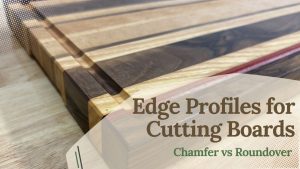
Roundover and chamfer are two of the best edge profiles for cutting boards — simple to make and they instantly give a board a more professional look. In this guide, I’ll compare roundover vs chamfer, show which router bits work best for each, and share practical tips for clean edges (tear-out prevention, burn mark fixes, and a quick sanding finish).
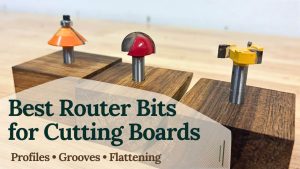
Cutting boards don’t need a huge router bit collection — but the right bits make the job faster, cleaner, and way more repeatable. In this guide, I’ll show the essential router bits I use for cutting boards (flattening, juice grooves, edge profiles, and template work), when to use each one, and what to watch out for so you get crisp results without tear-out.
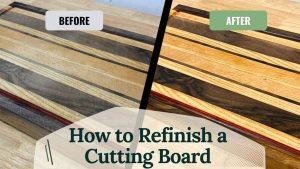
Here’s how I refinished a heavily used cutting board and brought it back to a like-new finish—flattening the surface, reshaping the juice groove, sanding smooth, then re-oiling and waxing (with clear before-and-after results).
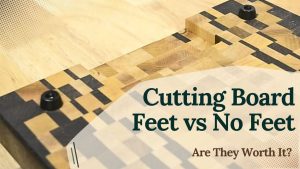
Not sure if you should add rubber feet to your cutting board? Here’s the practical comparison—grip, hygiene, and airflow—plus quick install tips and when I skip feet.
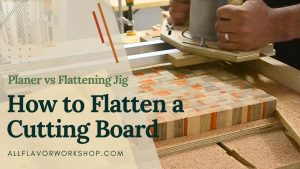
Trying to flatten a cutting board after glue-up? Here’s when a planer is the fastest option — and when a router flattening jig is the safer choice for wide or twisted boards — with simple steps for both methods.