
Knowing how to maintain and care for your cutting board makes a big difference if you want it to stay in good shape for years. A wooden cutting board goes through a lot in normal kitchen use — moisture, knife marks, food contact, washing, drying, and constant changes in temperature and humidity. If you take care of it regularly, it will keep looking better, feel better in use, and last much longer.
The good thing is that cutting board maintenance does not need to be complicated. Most of it comes down to a simple routine: clean it properly, let it dry well, and give it oil or wax when the wood starts to look dry. Small, regular care is usually much easier than waiting until the board looks tired, rough, or neglected.
That is exactly how I see it in the workshop too. A nice cutting board can look premium when it is newly finished, but what really matters is how it holds up after weeks and months of actual kitchen use. Regular maintenance is what keeps that board looking good and working well.
And if your board is already much more worn out, dry, or damaged, have a look at my How to Refinish a Cutting Board (Make It Look Brand New Again) guide, where I go much deeper into bringing a board back.
Table of Contents
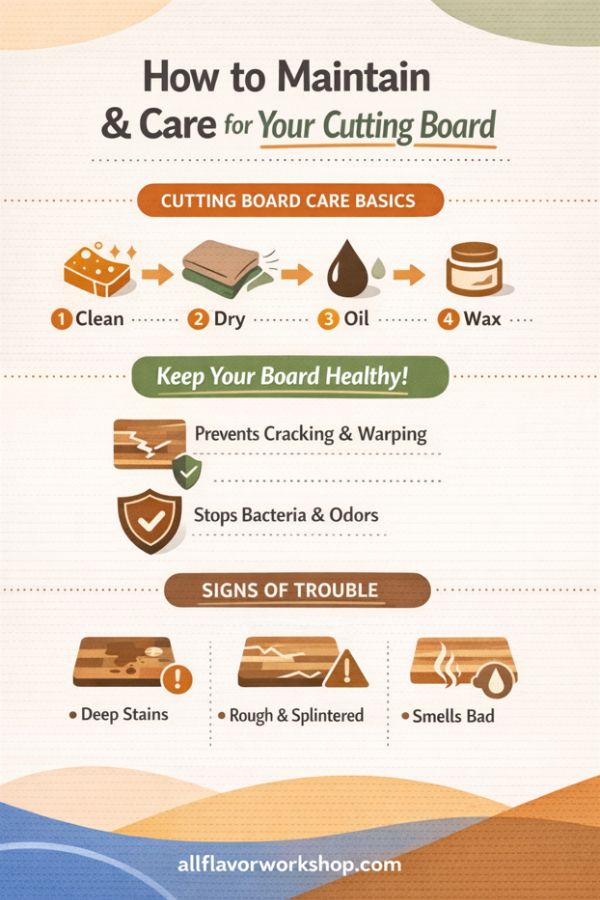
📌 Save THIS PIN to your Board on Pinterest!
Why Cutting Board Maintenance Matters
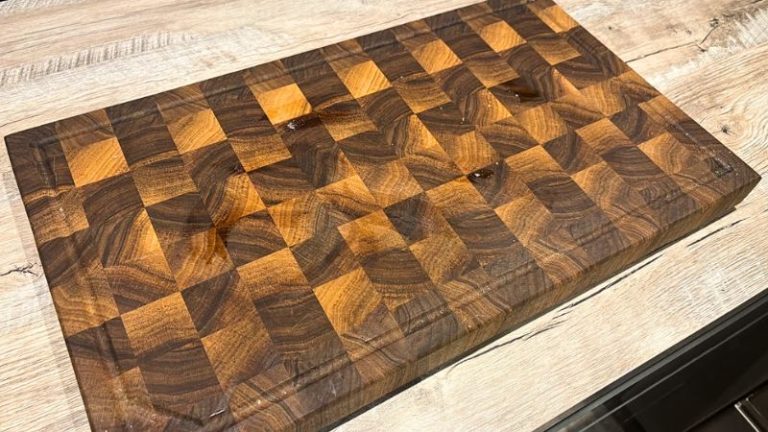
A wooden cutting board is not something you finish once and forget about. It is a piece of wood that gets used, washed, dried, and exposed to moisture again and again. Because of that, regular maintenance is part of owning a wooden cutting board, especially if you want it to keep looking good and stay comfortable to use.
When a board is cared for properly, the wood stays in better condition, the surface feels smoother, and the board is less likely to dry out too much over time. It also helps the board keep that richer, finished look instead of turning dull, rough, or tired.
A few simple reasons why cutting board maintenance matters:
- It helps protect the wood from drying out too much
- It keeps the surface looking better for longer
- It helps the board feel smoother and more pleasant to use
- It can reduce the chance of deeper wear showing up too quickly
- It is much easier to maintain a board regularly than to fully restore it later
For me, this is one of those things that is easy to underestimate at first. But once you start using cutting boards regularly, you notice pretty quickly that a board that gets some basic care simply ages better.
NOTE: Small, regular maintenance usually gives better long-term results than occasional heavy repair.
What Happens If You Do Not Maintain a Wooden Cutting Board
If a wooden cutting board does not get regular care, it usually starts to look and feel worse little by little. The surface can become dull, the wood may look dry, and the board can lose that richer finished look it had when it was new.
It does not mean the board is ruined right away, but over time it can become rougher, more worn-looking, and less pleasant to use. And the longer it goes without care, the more likely it is that you will eventually need more than just a simple oiling or waxing.
A few common things that can happen when a board is neglected:
- The wood starts to look dry and faded
- The surface can feel rougher than before
- Knife marks and wear become more visible
- The board loses some of its smooth, finished feel
That is exactly why I think regular care is worth it. It is much easier to maintain a board as you go than to restore it later.
Daily Cutting Board Care After Normal Use
Most of the time, good cutting board care is not about doing something complicated. It is just about building a simple habit after normal kitchen use.
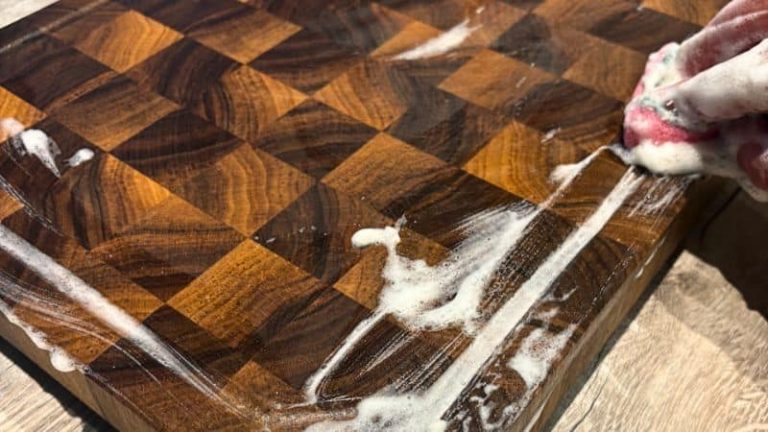
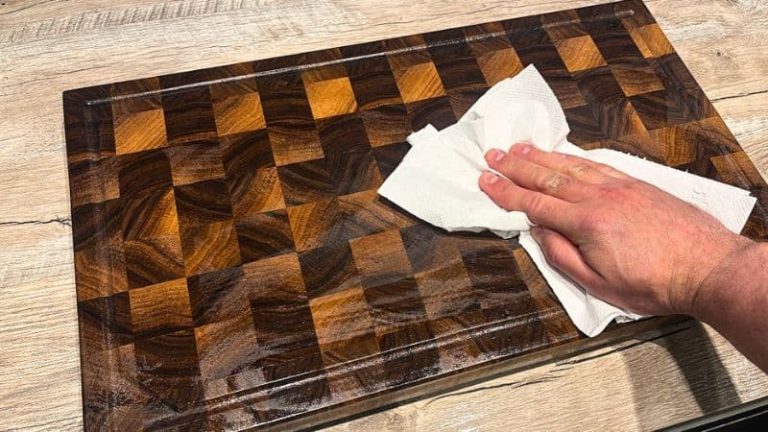
After using the board, I would clean it fairly soon instead of letting moisture or food residue sit on it for too long. Then I would let it dry properly before putting it away or before applying any oil or wax later. That simple routine already does a lot.
What I like about this part is that it does not take much effort, but it makes a real difference over time. When a board is cleaned properly and allowed to dry well, it just tends to stay nicer. It feels better in use, looks better on the counter, and usually needs less heavy repair later.
This is also where I think many people go wrong. They focus only on oiling once in a while, but the everyday part matters too.
How to Oil and Wax a Cutting Board
Oiling and waxing are the two main steps that help keep a wooden cutting board in good shape over time. They work together, but they do not do exactly the same thing.
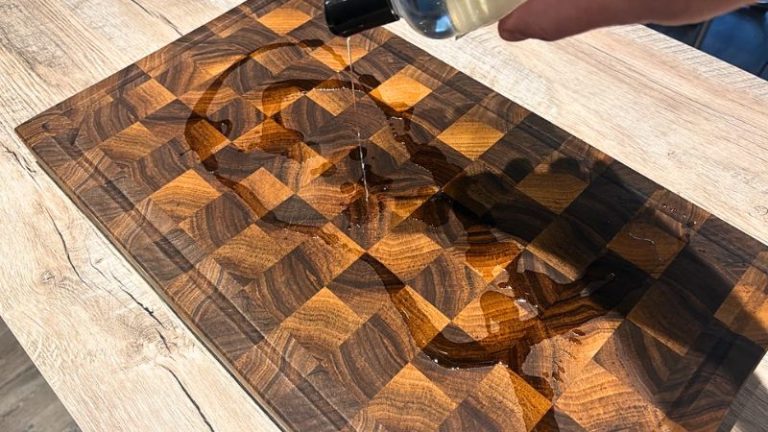
- Oil helps nourish the wood and keeps it from looking too dry. It soaks into the surface and helps bring back that richer, healthier look.
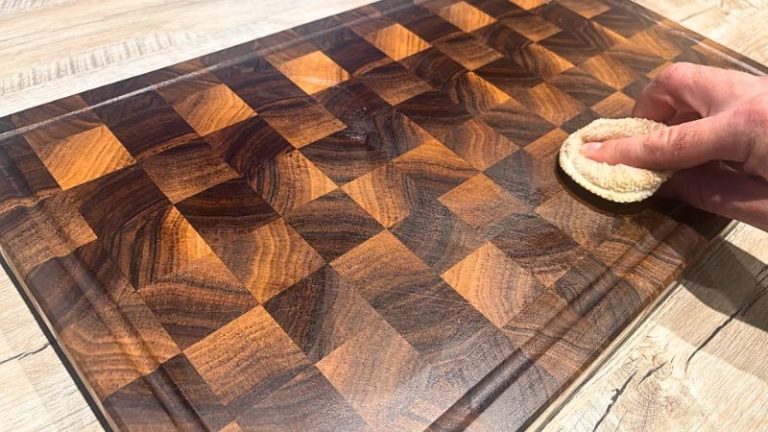
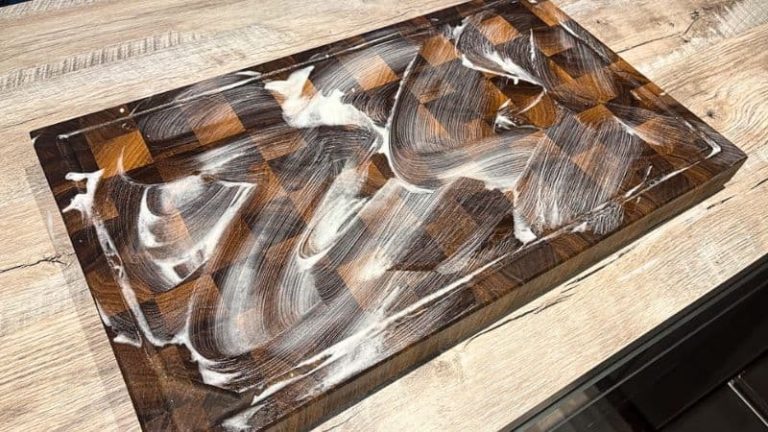
- Wax is more of a protective top layer. It helps the surface feel smoother and adds another level of protection after the oil has already done its job.
For regular care, I think it helps to keep this simple. If the board starts looking dry, faded, or less lively, that is usually a good moment to apply oil. Once the oil has had time to soak in and the surface is no longer overly absorbent, wax can help finish it off and keep the board feeling better in use.
You do not need to overcomplicate this part. The important thing is to pay attention to how the board looks and feels.
- A board that looks dry is usually asking for oil.
- A board that already feels good but could use extra protection is a good candidate for wax.
| Step | What it does | When to use it | Main benefit |
|---|---|---|---|
| Oil | Soaks into the wood and helps nourish it | When the board looks dry, faded, or thirsty | Brings back a richer look and helps keep the wood in better condition |
| Wax | Sits more on the surface as a protective layer | After oiling or when the board could use extra surface protection | Helps the board feel smoother and adds a bit more protection |
| Oil + Wax | Combines nourishment with surface protection | As part of a fuller maintenance routine | Keeps the board looking better and feeling better for longer |
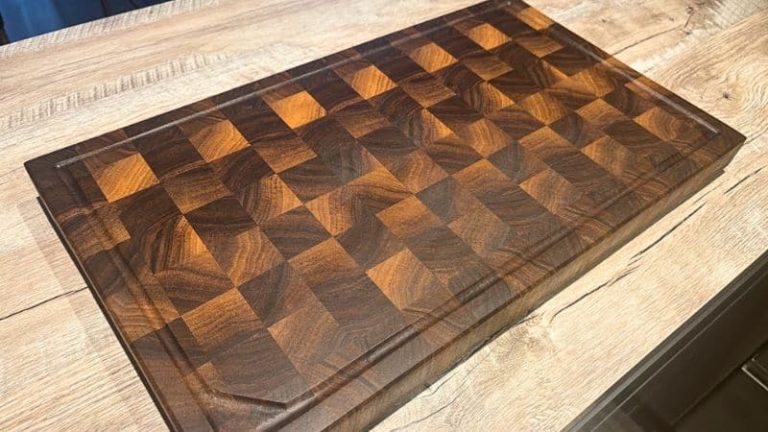
For me, this is the part of cutting board maintenance that makes the biggest visual difference. A board can look tired one moment, and after the right oil and wax treatment, it already feels much more alive again.
My Preferred Cutting Board Care Routine
I like to keep things very simple. I don’t want cutting board care to become some big project every time, so I prefer having the products I use close by and making them part of a normal routine. That way, it is much easier to actually do it.
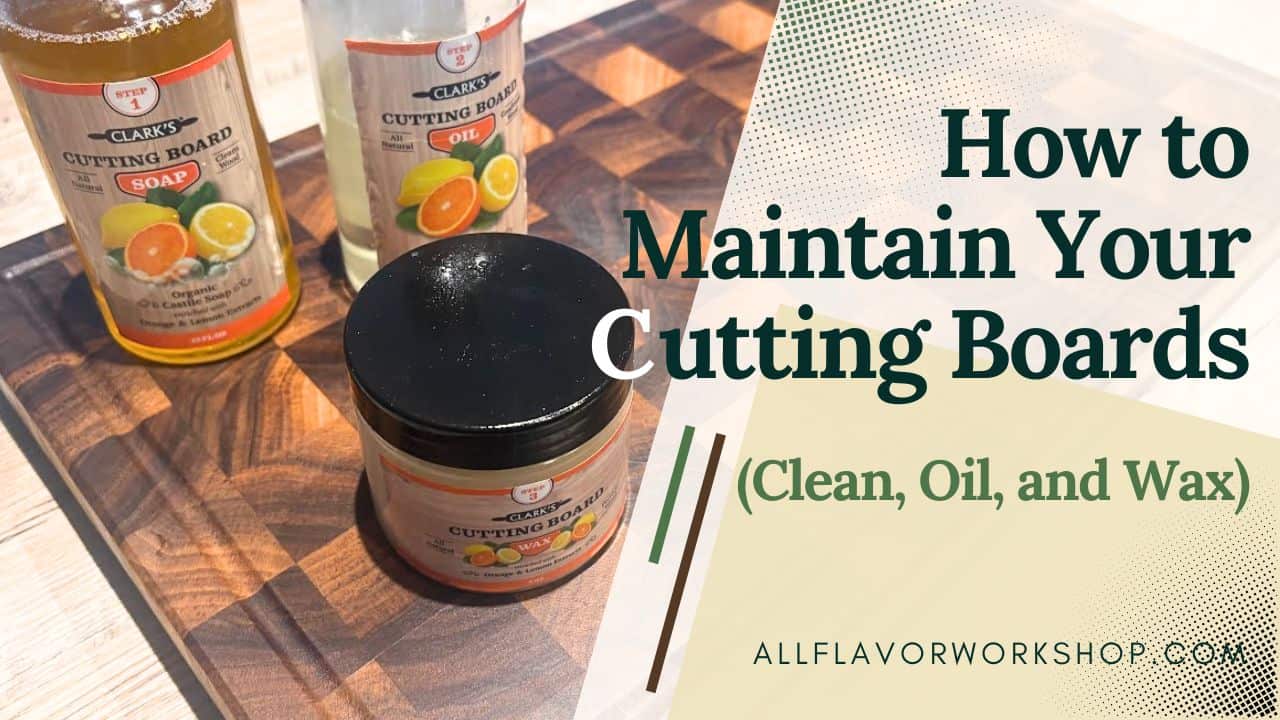
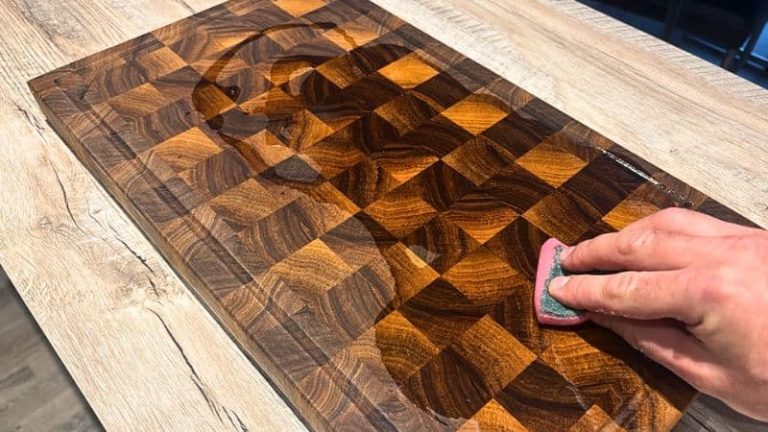
My preferred setup is using Clark’s soap, oil, and wax. I like the whole combo because it keeps the process straightforward: clean the board, let it dry, apply oil when it needs it, and finish with wax when I want that extra protection and smoother feel. (I personally like the citrus version the most, but the main point is not really the scent — it is that the routine is easy enough to repeat.)
That is what I think matters most here. If the products are easy to reach and the process feels simple, you are far more likely to keep up with it. In practice, that can be as easy as keeping the soap, oil, and wax somewhere near the kitchen so you can use them without having to think much about it.
If you want a deeper look at the different product types and what they do, my Best Wood Finishes for Cutting Boards (Food-Safe Oils, Wax, and Care Tips) article goes into that in much more detail.
NOTE: The easier you make the routine, the more likely you are to actually maintain the board well over time.
Signs Your Board Needs More Than Regular Maintenance
Regular care can do a lot, but at some point a board may need more than just cleaning, oil, or wax. If the surface is more heavily worn or damaged, that is usually the point where simple maintenance is no longer enough and a deeper refresh makes more sense.
A few signs to look for:
- The board feels rough even after cleaning and oiling
- There are many deeper knife marks across the surface
- The wood looks uneven, tired, or badly worn
- Small cracks, pits, or damaged areas start showing up
- Oil and wax improve the look only temporarily
That is usually the stage where I would move beyond normal maintenance and go into refinishing instead. If your board is already at that point, my How to Refinish a Cutting Board (Make It Look Brand New Again) article is the better next step.
Common Mistakes to Avoid
There are still a few mistakes that can make a good board wear out faster or just look worse than it should. In many cases, the problem is not that people do nothing — it is that they do one thing well, but skip the rest of the routine.
For me, the biggest difference comes from being consistent. A board usually does better with simple regular care than with random heavy treatment once in a long while.
| Mistake | What can happen | Better approach |
|---|---|---|
| Only oiling occasionally but ignoring daily care | The board still ends up looking tired or worn | Combine routine cleaning, drying, oiling, and waxing when needed |
| Letting the board stay wet too long | The wood can look worse and age faster over time | Clean it, then let it dry properly after use |
| Waiting until the board looks very dry | Maintenance becomes less effective and the board looks more neglected | Apply oil before the board gets too far gone |
| Thinking wax replaces oil | The board may get surface protection, but the wood still looks thirsty underneath | Use oil for nourishment and wax as the finishing protective step |
| Using maintenance when the board really needs refinishing | The result improves only a little or only for a short time | Recognize when the board needs a deeper refresh instead |
In short, do not overcomplicate it, but do not ignore it either. A simple routine followed regularly is usually what keeps a cutting board looking and feeling good the longest.
Wrap-Up
For me, the most important thing about cutting board care is keeping it simple enough that you actually do it. That is why I like having the soap, oil, and wax close to the kitchen instead of stored somewhere far away in the workshop. When everything is easy to reach, it is much easier to build the habit.
If I had to highlight the key message, it would be this: clean your board after every use, let it dry well, and take care of it before it starts looking tired. That small routine makes a real difference over time. The board stays in better shape, looks healthier, and you naturally get used to maintaining it.
And if your board is already past the point of simple maintenance and needs a deeper refresh, check out my How to Refinish a Cutting Board (Make It Look Brand New Again) guide.
FAQ
1. How often should I oil a wooden cutting board?
That depends on how often you use it, but a good rule is to oil it whenever the wood starts to look dry or faded. A board that is used often in the kitchen may need oil more regularly than one that is used only occasionally.
2. Do I need wax if I already use cutting board oil?
Oil and wax do different jobs. Oil helps nourish the wood, while wax adds a smoother and more protective layer on the surface. You can use oil alone, but wax is a useful extra step if you want more protection and a nicer finished feel.
3. What is the best daily care for a wooden cutting board?
The best daily care is simple: clean the board after use and let it dry properly. That basic routine helps keep the board in better condition and makes it easier to maintain over time.
4. What happens if I do not maintain my cutting board?
If a wooden cutting board does not get regular care, it can start to look dry, dull, rough, and more worn over time. In many cases, simple maintenance is enough to prevent that from happening too quickly.
5. When does a cutting board need refinishing instead of regular maintenance?
If the surface stays rough even after cleaning and oiling, or if the board has deeper knife marks, cracks, pits, or more visible wear, it may need refinishing rather than simple maintenance.
